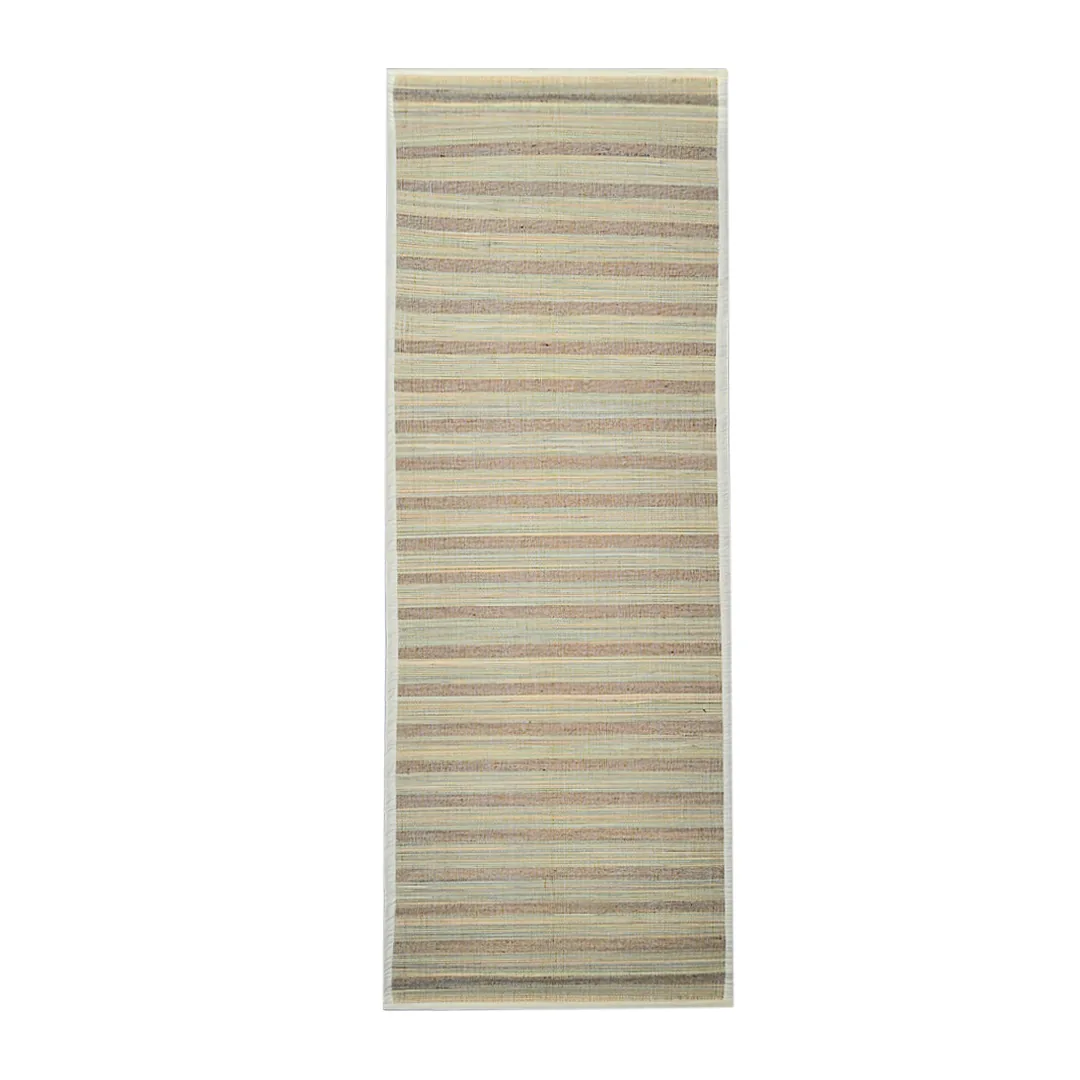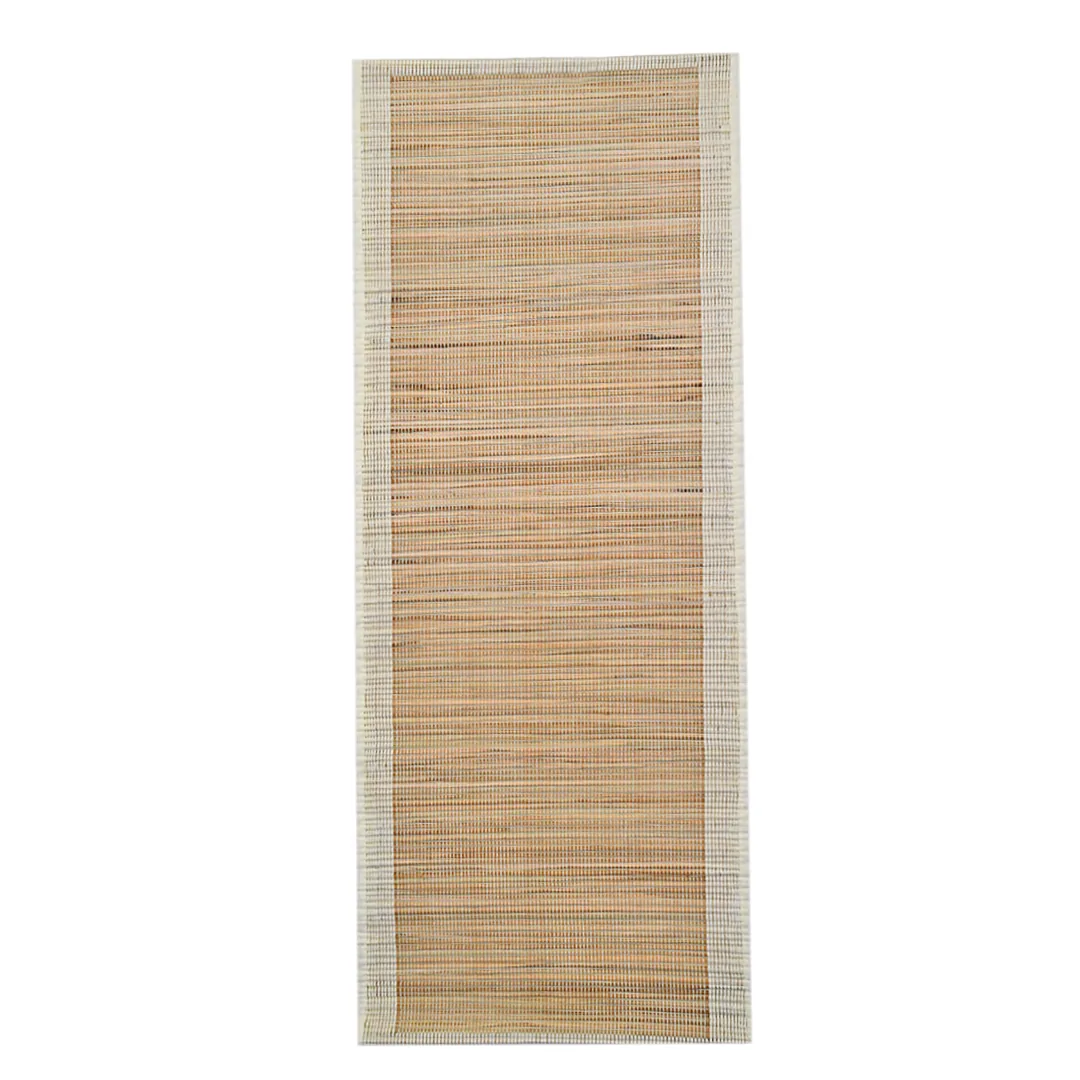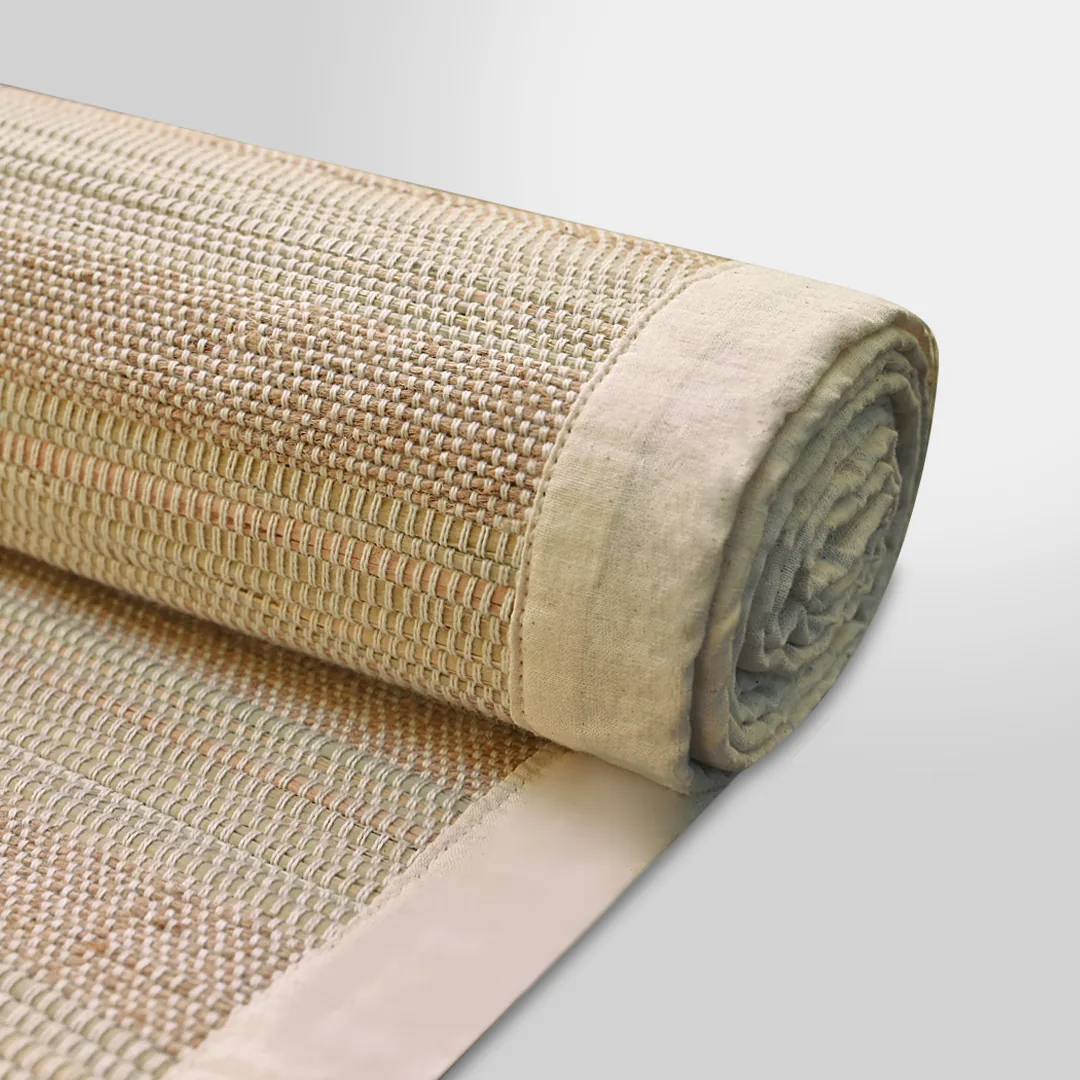
A jute yoga mat is usually a thin layer of woven jute fibre bonded to a base of "PER" or natural rubber, and that base does most of the work. Jute gives a textured, breathable surface that grips well when dry and comes from a crop grown largely in India and Bangladesh; its drawbacks are a scratchy feel, fibres that shed and go brittle, and a backing whose material is often not clearly stated. One clarification first: our Sambu Jute is a historical name. The mat is sambhu grass woven with organic cotton and contains no jute.

What jute is
Jute is a bast fibre from plants of the genus Corchorus. It is extracted by retting: stems are bundled and immersed in slow-running water until the fibre can be stripped from the stalk. The fibres are long, off-white to brown, and made mostly of cellulose and lignin. India is the world's largest producer, and India and Bangladesh are the primary producers. Most of the crop becomes hessian, sacking and cordage, which tells you its character: strong, coarse and inexpensive.
How a jute mat is built
Jute alone would be an open, scratchy scrim with no grip on the floor, so it is laminated onto a base. Two constructions dominate:
- Jute over natural rubber. Cushioning and floor grip, but heavy, and it carries the natural latex some people react to. If you are allergic to natural latex, choose with care and write to us first.
- Jute over PER. More common, and more confusing.
What PER means
PER is marketed as "polymer environmental resin". That is a trade description, not a standard material name: it does not say which polymer the base is made from, and we have not found a standards body that defines it. If a seller cannot name the base polymer, treat the "environmental" in PER as marketing. We explain the plastics it is compared with in what PVC yoga mats are made of.
The pros
Dry grip. Jute's ridged weave gives the palms something to hold. On a dry day it is one of the grippier natural surfaces, without the sticky feel of warm foam.
Breathable surface. Air moves through the open plant-fibre weave, so sweat does not sit in a film as it does on foam or cork.
Light and inexpensive. Jute is a relatively cheap fibre and the base is thin, so these mats sit at the lower end of the price range.
The cons
Scratchy. Kneeling, forearm work and long sits can leave skin red, and some people dislike the texture from the first session.
Shedding and brittleness. Jute sheds short fibres as it wears and can go brittle where the mat is rolled daily.
The base is the mat. A jute mat is only as washable, as grippy on the floor and as plastic-free as its base. With PER, you often do not know what that is. With rubber, you have weight, smell and latex.
Not washable. A bonded jute mat can be wiped but not soaked; sweat reaching the glue line can lift the fibre layer.
Jute mat vs our sambhu grass mats
We do not make a jute mat; our grass mats solve a similar problem differently.
| Jute over PER or rubber | Sambhu grass mats (ours) | |
|---|---|---|
| Surface fibre | Coarse jute | Fine sambhu grass woven with organic cotton |
| Feel on skin | Scratchy | Firm and cool, smoother than jute |
| Base | Bonded PER (polymer unstated) or full rubber | Thin natural tree latex, brushed on by hand |
| Construction | Laminated layers | Woven as one cloth on a handloom |
| Weight | Light | About 1 kg |
| Cleaning | Wipe only | Shake out, damp cloth, never soak |
| Price | Low | About ₹1,700–₹2,000 at the time of writing |
Our grass mats are 3 mm and firm, so a jute-over-rubber mat will be softer under the knee. On the other points we think grass is the more honest material: woven, not glued; no undeclared polymer; finer against the skin. More in cotton vs jute yoga mats.
About the name "Sambu Jute"
Our Sambu Jute has a historical name. It is sambhu grass and organic cotton, 3 mm, about 1 kg, bound in cream cotton, with plant-dyed stripes. There is no jute in it. Its plainer sibling, the Sambu Frame, is the same grass woven with GOTS-certified organic cotton in a tan field with a paler border.
Frequently asked questions
Are jute yoga mats good?
They are good at specific things: dry grip, a breathable textured surface, light weight and a low price. They are weak on skin comfort, because jute is coarse and scratchy, and on transparency, because the bonded base is often an undefined "PER". They suit a dry, standing practice more than kneeling or hot practice.
What is a PER yoga mat?
PER is sold as "polymer environmental resin", a trade description rather than a standard material name. It does not state which polymer the base is made of, and no standards body we could find defines it. Ask the seller to name the actual polymer; if they cannot, do not assume it is PVC-free or plastic-free.
Are jute yoga mats scratchy?
Yes, for most people. Jute is the fibre used for hessian sacking, and a jute mat surface is coarse against knees, forearms and bare feet. Some people get used to it; others find it uncomfortable from the start. A finer plant fibre, such as sambhu grass woven with cotton, feels firm and cool without the roughness.
Is the TwinsPoles Sambu Jute mat made of jute?
No. The name is historical. The Sambu Jute is sambhu grass woven with organic cotton, 3 mm thick and about 1 kg, with cream cotton binding, plant-dyed stripes and a thin layer of natural tree latex brushed onto the underside for grip.
If what drew you to jute was a cool, breathable, natural surface, try the Sambu Jute or compare all three sambhu grass mats.