Yes, one mat can serve both yoga and meditation, as long as you accept a trade-off: a mat soft enough for kneeling is a little too yielding for a long sit, and a mat firm enough for sitting gives less under the knees. Of ours, the Prithvi, the Sambu Frame and the Indico bridge both practices best, and a firm cushion on top of any of them settles most of what remains.
What each practice asks of a mat
| Asana practice | Seated meditation | |
|---|---|---|
| Grip | Essential, for hands and feet | Barely matters |
| Cushioning | Welcome under knees and wrists | Firm is better; soft mats let the sitting bones sink |
| Warmth from the floor | Useful in savasana | Important for a long sit on tile in winter |
| Coolness | Welcome when you sweat | Welcome in summer, unwelcome in winter |
| Size | Full length and width | A square metre at most |
| Washing | Often, after sweat | Rarely |
The two lists overlap more than they clash. Both want a mat that insulates from a hard floor, both are happier on natural fibre than on sticky foam, and both benefit from a mat that lies flat without curling. The clash is cushioning: the softness that comforts a kneeling knee makes a sitting pelvis wobble, and after twenty minutes a wobble becomes a fidget.
Three of ours that bridge both
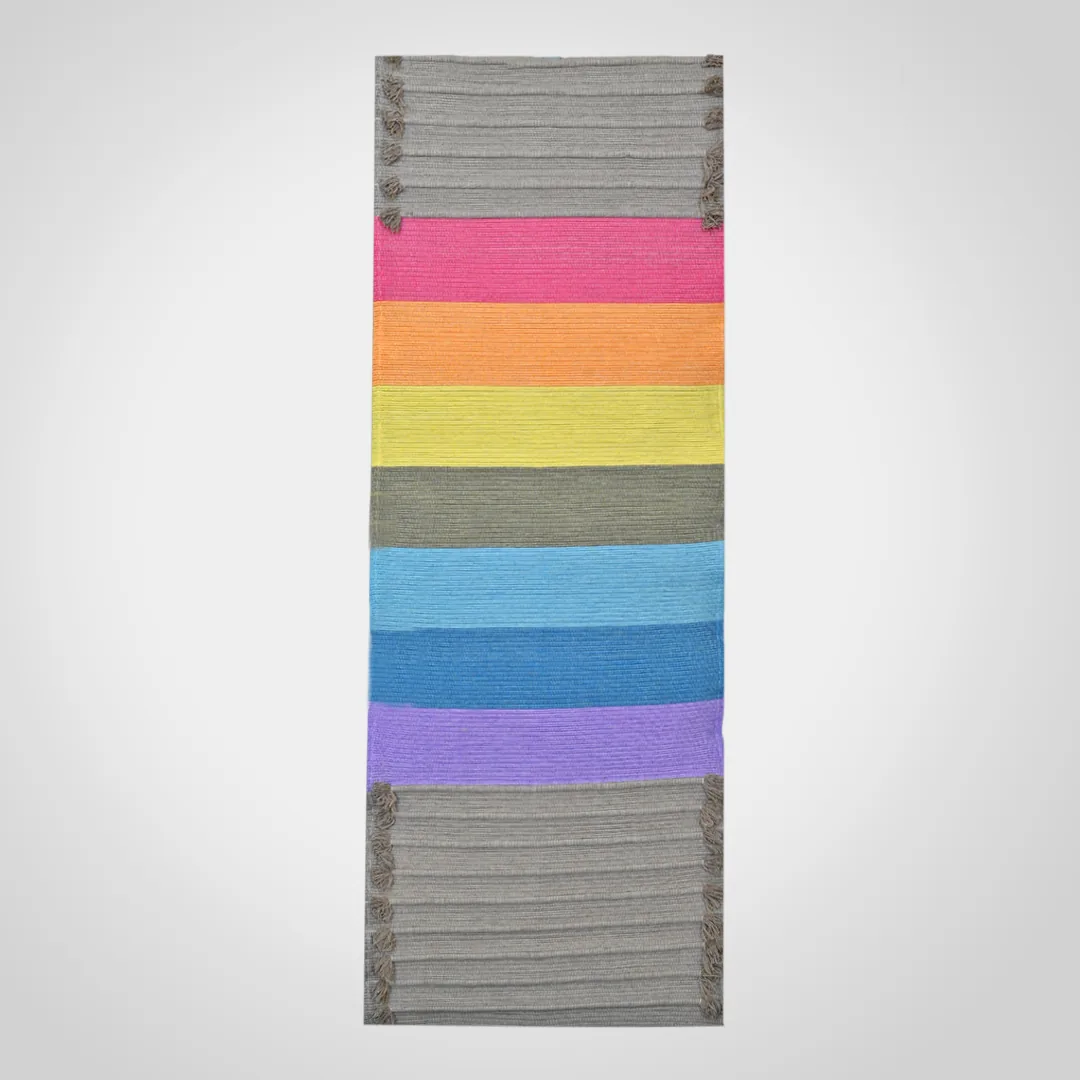
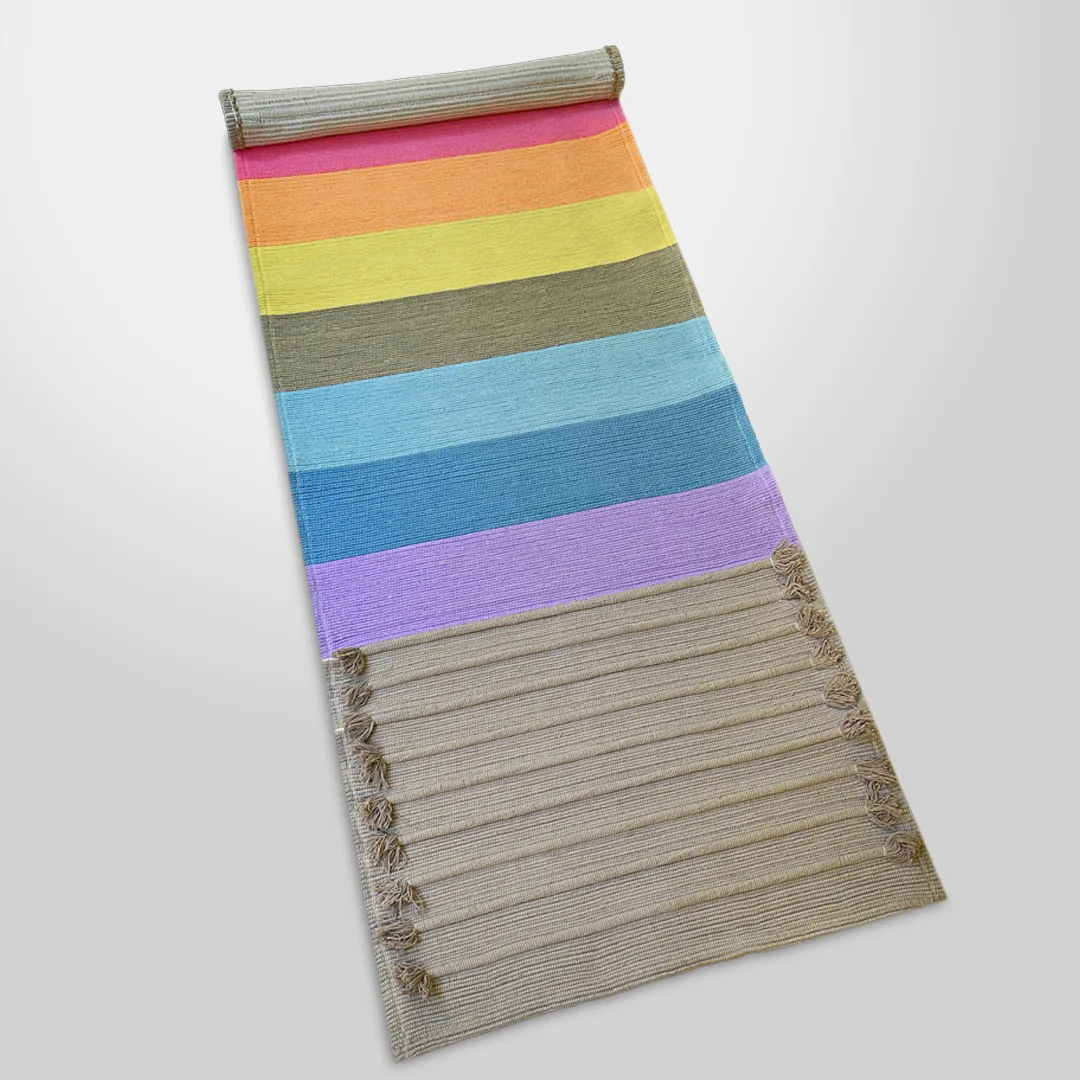
Prithvi: firm cotton, long enough for both
The Prithvi is six-ply GOTS-certified organic cotton, 5 mm thick, firm rather than soft, and 188 cm long. Sit at one end for meditation; unroll the rest for practice. The dense weave gives enough under the knees for most kneeling without letting the sitting bones sink, and the earth tones with seven chakra bands make it a calm thing to sit on. Hand wash cold and dry flat in shade.
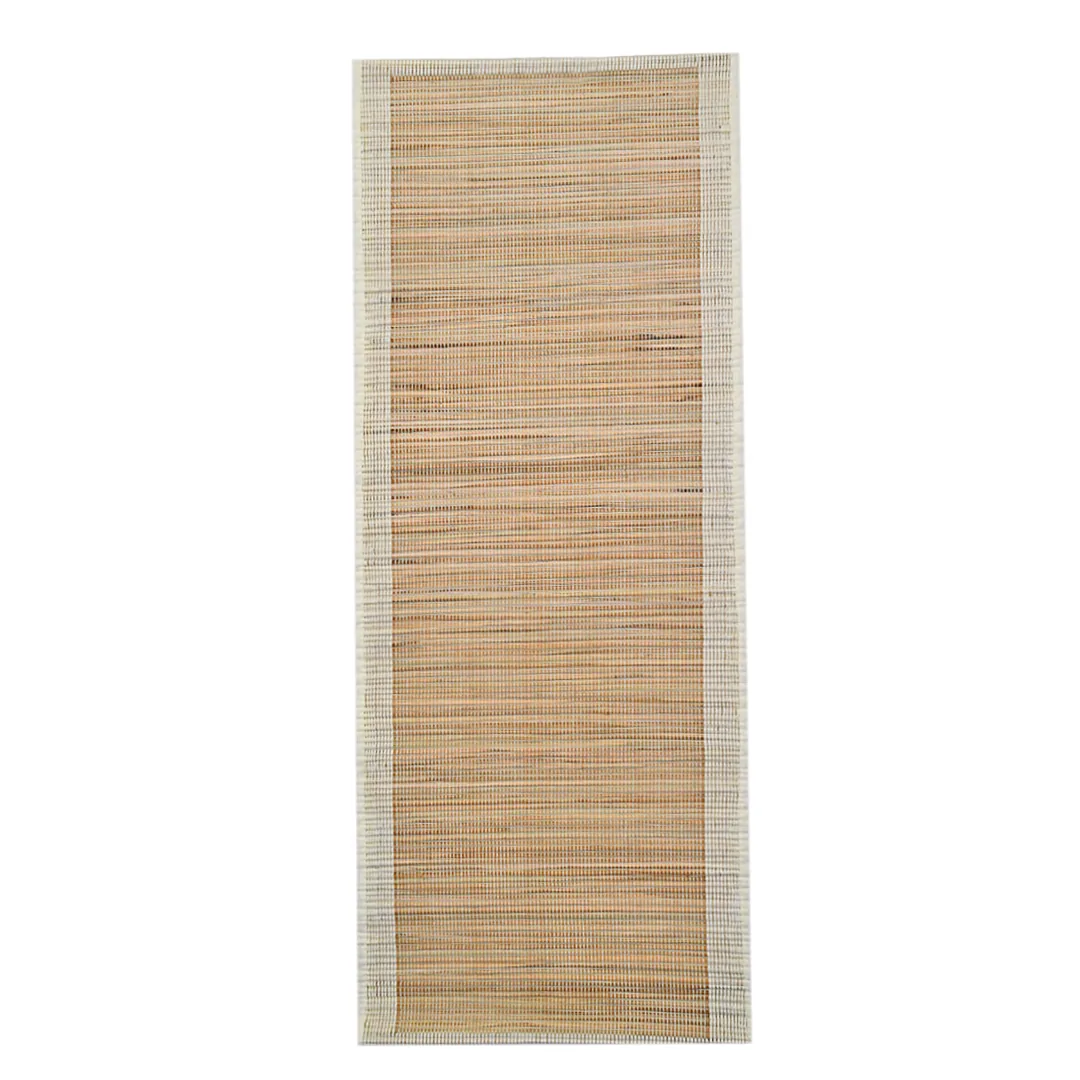
Sambu Frame: cool grass for sitting and sweating
The Sambu Frame is sambhu grass woven with GOTS-certified organic cotton, 3 mm thick and about 1 kg, in a tan field with a paler border. It is firm and cool, which makes it an excellent seat and a good surface for hot practice, and it wipes clean rather than needing a wash. It gives little under the knees, so pair it with a folded blanket for kneeling poses.
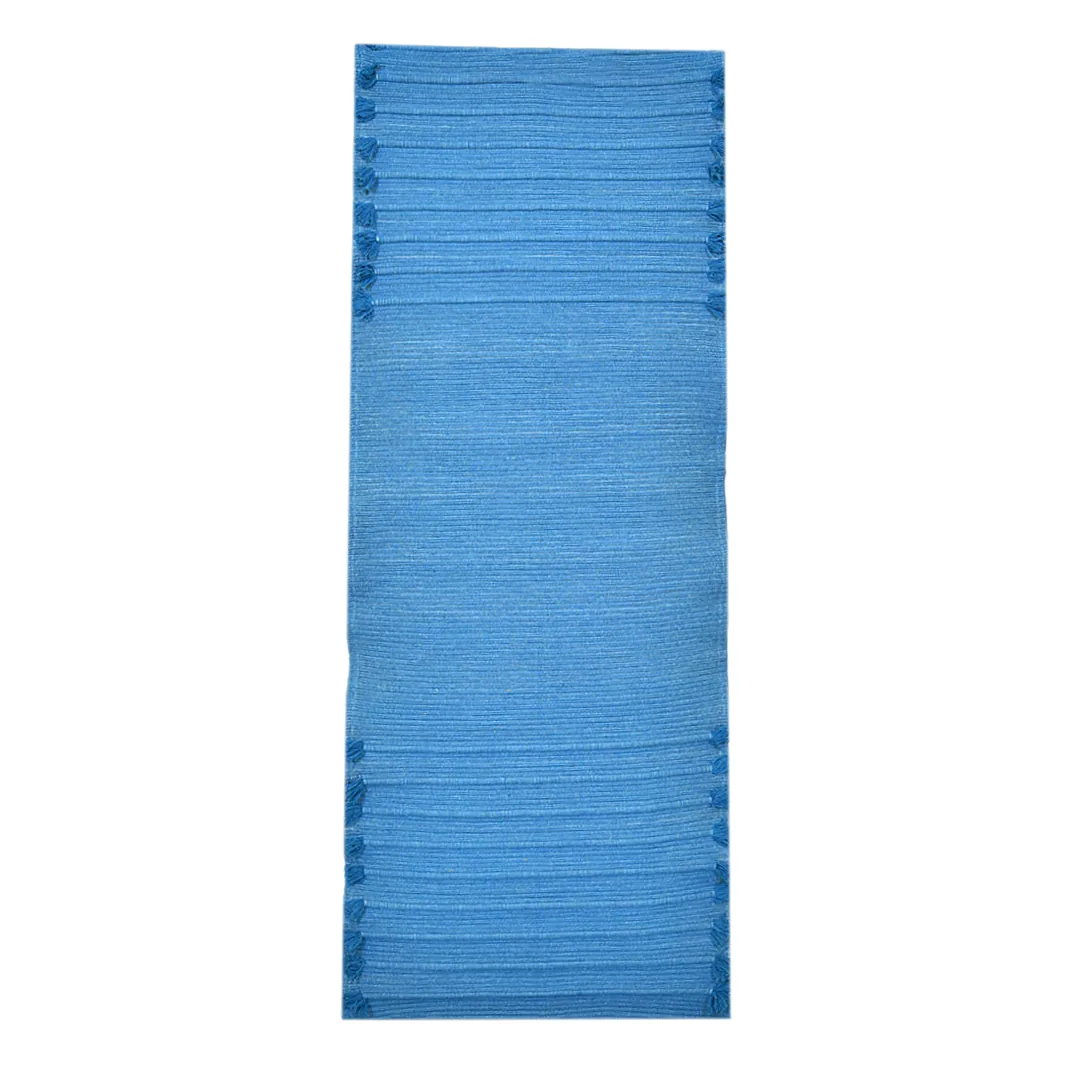
Indico: the quiet one
The Indico is plain indigo-dyed organic cotton, 5 mm, in a ribbed weave with hand-knotted tassels. It grips better as your palms dampen, which suits active practice, and its single deep colour suits a meditation corner. Firmness sits between the Prithvi and the Sambu Frame.
All three have a thin layer of natural tree latex brushed onto the underside to hold on tile and marble. If you are allergic to natural latex, choose with care and write to us first.

Adding a cushion
A firm cushion or a blanket folded into a thick square, placed on the mat, lifts the hips above the knees, which is how most teachers suggest sitting for any length of time. The mat underneath insulates from the floor and stops the cushion creeping on tile; the cushion gives the height. Put the cushion at the end of the mat so your knees still rest on cloth or grass rather than on the bare floor. With this one addition, any of the three mats above serves a daily sit as well as a daily practice.
When two mats are better
If you sit for long periods every day and also practise hot, fast asana, you may prefer to keep the sweat and the sitting apart: a cotton mat that is damp after practice is not where you want to settle for half an hour. In that case a cotton mat for asana and a grass mat for sitting is a sensible pair, and our grass mats are the least expensive mats we make, at about ₹1,700 to ₹2,000 at the time of writing. The Darbha, backed in cotton cloth and folding flat, is the purest meditation seat we weave; our meditation mat guide compares it with the grass and banana fibre mats, and our guide to all ten mats puts them side by side. For breathing practice specifically, see mats for pranayama and seated practice.
Frequently asked questions
Can I meditate on my yoga mat?
Yes. A yoga mat insulates you from a cold floor and gives your knees something softer than tile. The only drawback is softness: a thick, soft mat lets the sitting bones sink unevenly, which makes a long sit fidgety. A firm cotton or grass mat, with a cushion or folded blanket under the hips, works well for both practices.
Which TwinsPoles mat is best for both yoga and meditation?
The Prithvi, a firm 5 mm six-ply cotton rug, is the most balanced: enough under the knees for practice, firm enough to sit on, and long enough to do both. The Sambu Frame is the choice for hot climates and hot practice, cool and firm with a blanket added for kneeling. The Indico sits between the two.
Do I need a cushion to meditate on a mat?
Most people are more comfortable with one. A firm cushion or a thickly folded blanket on the mat lifts the hips above the knees, and the mat underneath insulates from the floor and keeps the cushion from sliding. Place it at one end of the mat so the knees still rest on the mat.
Is a thick mat bad for meditation?
Thick and soft, yes: the sitting bones sink unevenly and you shift to compensate. Thick and dense, such as a 5 mm six-ply cotton rug, is fine. Grass mats at 3 mm are the firmest seat and the coolest, which is why many people keep one for sitting.
If you want one mat for everything, start with the Prithvi and a folded blanket; if your climate is hot, the Sambu Frame is the cooler answer. Both are in our meditation collection.