A yoga mat, in the modern sense, is a sheet of foam, rubber or similar material that grips best when dry and is wiped rather than washed. A yoga rug is a woven cotton piece, usually with a ribbed or textured surface, that grips better as it takes up moisture and can be washed like cloth. You need a mat if you want cushioning and dry-hand stickiness; you need a rug if you sweat, want to wash what you practise on, or follow a tradition that uses one. Many practitioners lay a rug over a mat and get both.

Two words, two histories
The cotton rug is the older of the two. Before purpose-made mats existed, yoga was practised on grass, bare earth, animal skins and, later, towels and cotton mats; the first "sticky mat" was a piece of carpet underlay adopted by a teacher in the early 1980s, according to the Wikipedia entry on yoga mats. Foam and rubber mats grew out of that idea. The cotton rug never went away; it stayed in use in Ashtanga rooms and in Indian homes, and it is coming back as people look for something they can wash. We tell that story more fully in what is a yoga rug.
What each one is made of
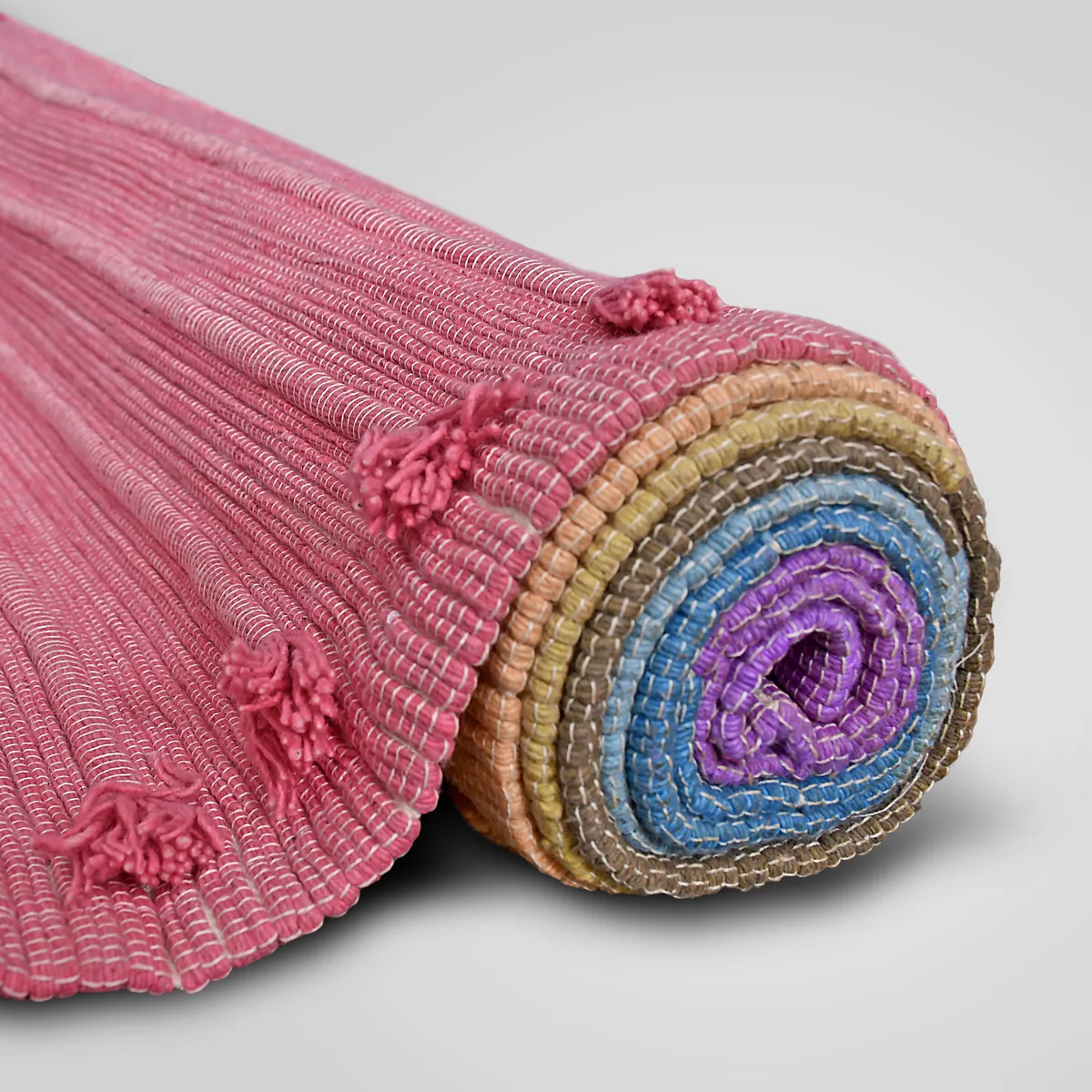
A modern mat is typically PVC, TPE, natural rubber, or cork or jute bonded to a rubber or plastic base. The surface is closed and slightly tacky. A rug is woven cotton yarn, often several plies thick, sometimes with a grip layer on the underside. Our rugs are handwoven from GOTS-certified organic cotton (the certification covers the cotton), dyed with plants, and finished with a thin layer of natural tree latex brushed onto the back so the rug holds on tile, marble and wood. If you are allergic to natural latex, choose with care and write to us first.
How grip behaves
This is the real difference, and it is almost a mirror image.
A foam or rubber mat is sticky when dry and loses grip as sweat builds; that is why hot-yoga classes are full of towels. A cotton rug can feel slightly slippery when bone dry, especially on the first day, and grips better as your palms dampen and the fibre takes up moisture. Cotton fibre is "almost pure cellulose" (Wikipedia), and in practice it draws moisture off your hands rather than letting it pool on the surface.
So the question is not "which grips better" but "when do you need grip". If your practice is gentle and your hands stay dry, a mat is simpler. If you sweat, or practise in a warm room, a rug gets better as the class goes on.
Mat, rug, or rug over mat
| Mat (foam or rubber) | Rug (woven cotton) | Rug over mat | |
|---|---|---|---|
| Grip when dry | Good | Fair; dampen palms | Good |
| Grip when sweaty | Drops; towel needed | Improves | Improves |
| Cushioning | Good to excellent | Firm (5–7 mm dense cotton) | Both layers |
| Washing | Wipe only, usually | Hand or machine wash by mat | Wash the rug, wipe the mat |
| Weight | Varies; rubber is heavier than cotton | ≈1.4–1.8 kg (ours) | Heaviest |
| Jump-throughs and slides | Feet stick | Feet glide | Feet glide |
| Typical use | Studio classes, home practice | Ashtanga, hot practice, home | Mysore rooms, shared studio mats |
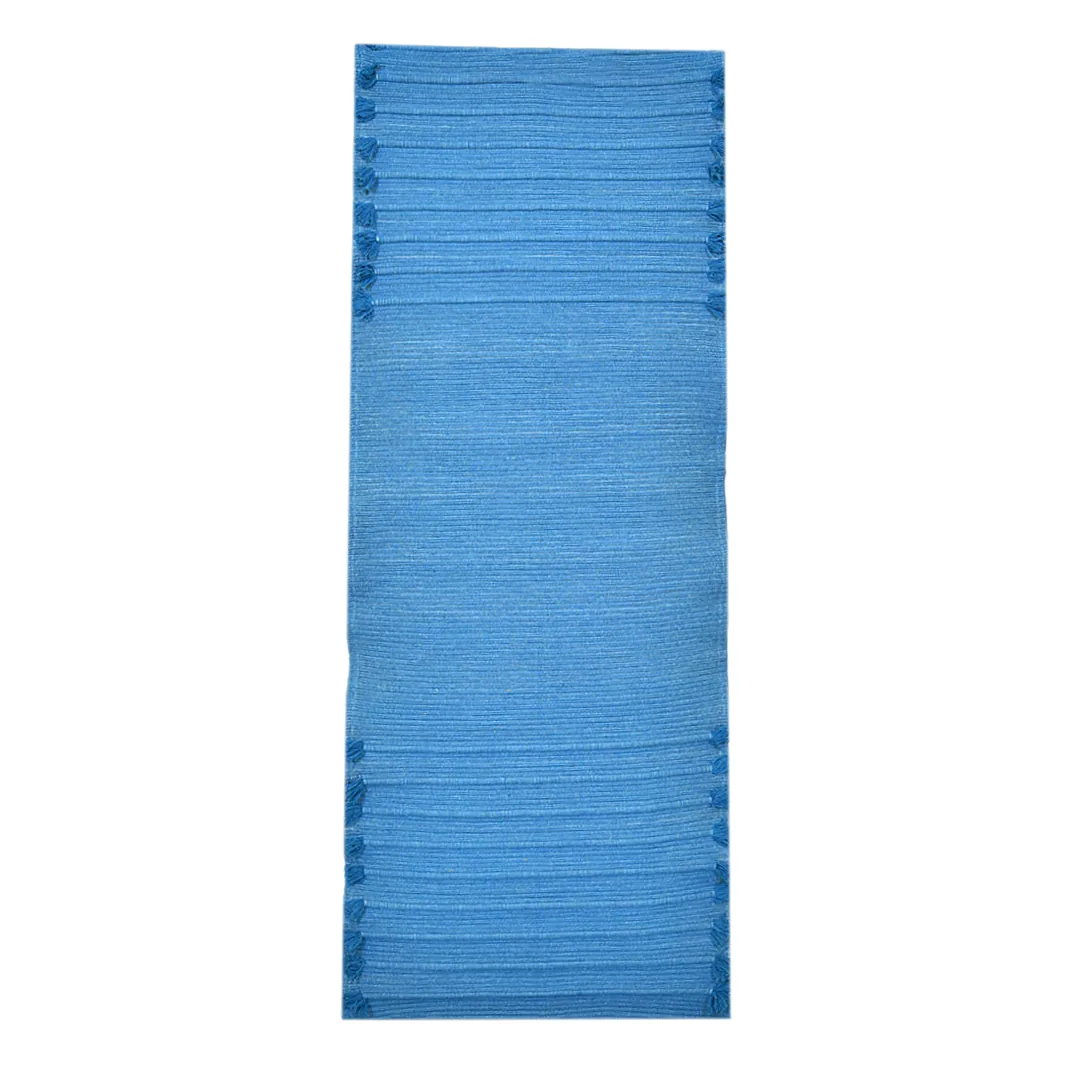
Where rugs are used alone: at home on a clean hard floor, in Ashtanga and Mysore-style practice, and anywhere washing matters. Our Indico is the simplest example, a 5 mm ribbed weave in one plant colour. Where rugs go over a mat: shared studio mats (the rug is the layer that touches you and goes in the wash), very sweaty practice on a rubber mat, or when you want rubber cushioning with a cotton surface. Our guide to Ashtanga on a yoga rug explains why the Mysore rooms settled on cotton.
When a rug can replace the mat entirely
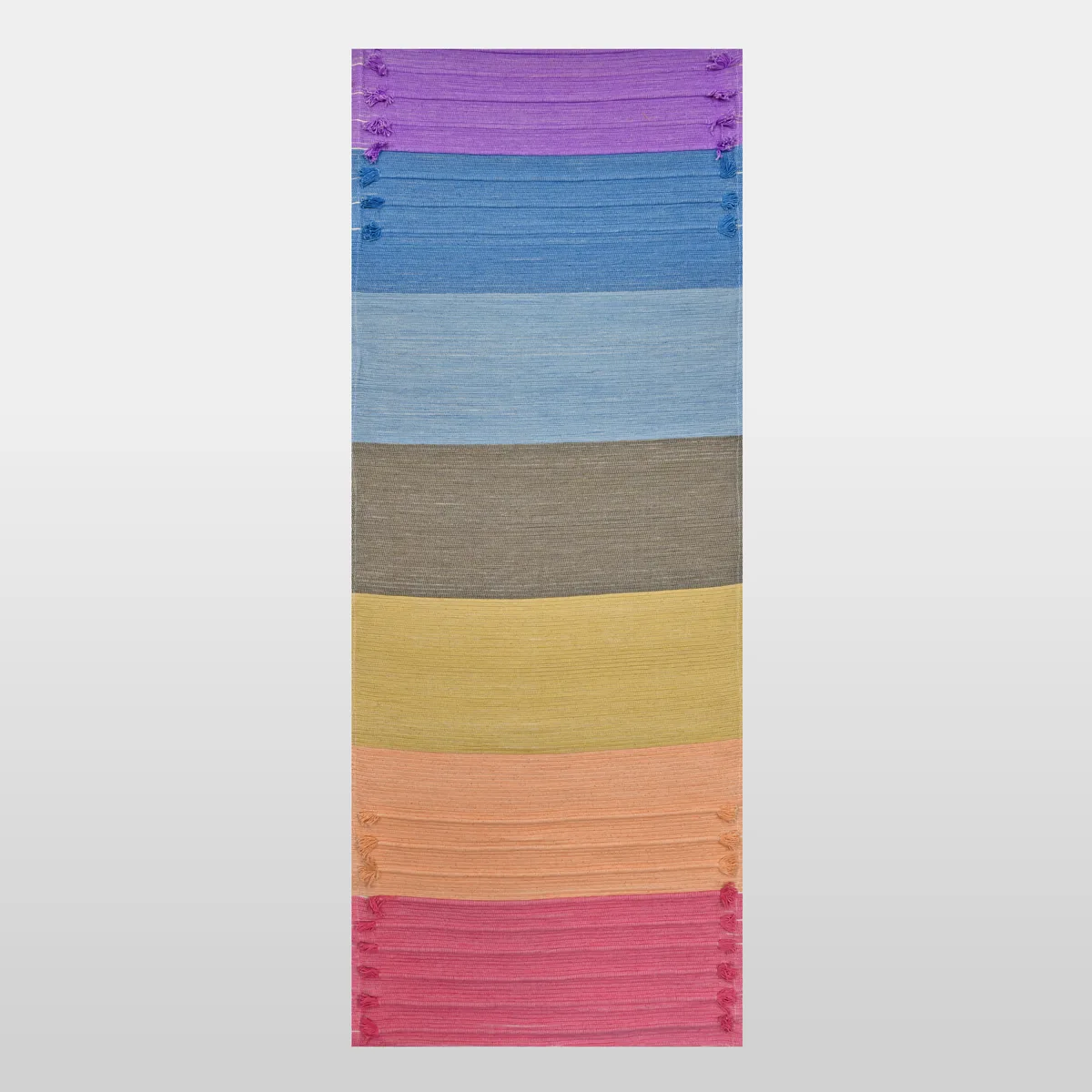
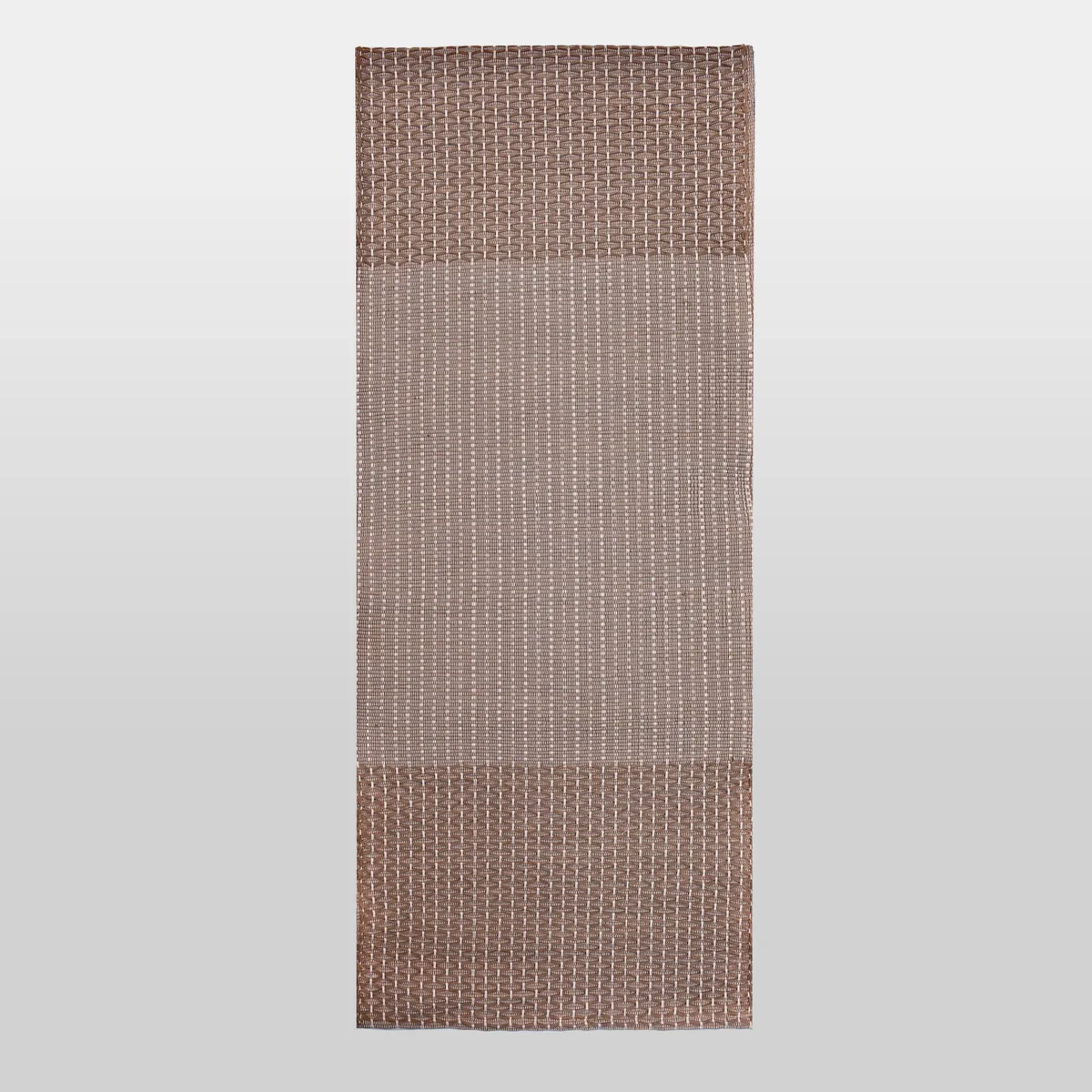
If you want one thing, not two, the deciding factor is cushioning. A rug on a hard floor is firmer than a 6 mm foam mat. Our 5 mm six-ply Prana Shakti and the 7 mm Diamond Clay are the rugs we weave for people who use a rug alone; the Diamond's raised lattice adds grip and the extra 2 mm is noticeable under the knees. People who want deep padding under the spine for long floor work will still prefer a thick rubber mat, or a rug over one.
Washing and ageing
A rug is cloth, so it ages like cloth: the plant colours soften over years, the edges stay put, and when the latex grip softens after many washes a thin fresh coat restores it. The chakra rugs and the Indico are hand washed cold with a mild natural detergent and dried flat in shade; the Diamond rugs can take a delicate 30 °C machine cycle in a laundry bag. A foam or rubber mat cannot be washed that way, and when its surface wears it is replaced. Full instructions are on our Mat care page.
Frequently asked questions
What is the difference between a yoga mat and a yoga rug?
A yoga mat is a sheet of foam, rubber or similar material that grips best when dry and is wiped clean. A yoga rug is woven cotton that grips better as it takes up moisture and can be washed like cloth. Mats offer more cushioning; rugs offer washability and grip when sweaty.
Can you use a yoga rug without a mat underneath?
Yes, on a clean hard floor. A rug with a grip layer underneath, such as natural latex, holds on tile, marble and wood. A rug alone is firmer than a foam mat, so choose 5–7 mm of dense cotton if you kneel or lie down a lot, and expect to dampen your palms for the first few sessions.
Why do Ashtanga practitioners use a cotton rug?
Ashtanga is a sweaty practice with jump-throughs and slides. Cotton takes up sweat and grips better as it dampens, while feet glide across it rather than sticking. The rug is also washed after practice, which matters in a busy shared room.
Is a yoga rug slippery?
A cotton rug can feel slippery when it is completely dry and new. Dampening your palms, sweeping dust off the floor and letting the mat warm up solve it, and most people stop noticing after a week. Once you sweat, a rug grips better than a dry one.
If you lean towards a rug, start with the Indico for a plain weave or the Prana Shakti for the seven chakra colours; both are in our cotton collection alongside the thicker Diamond rugs.