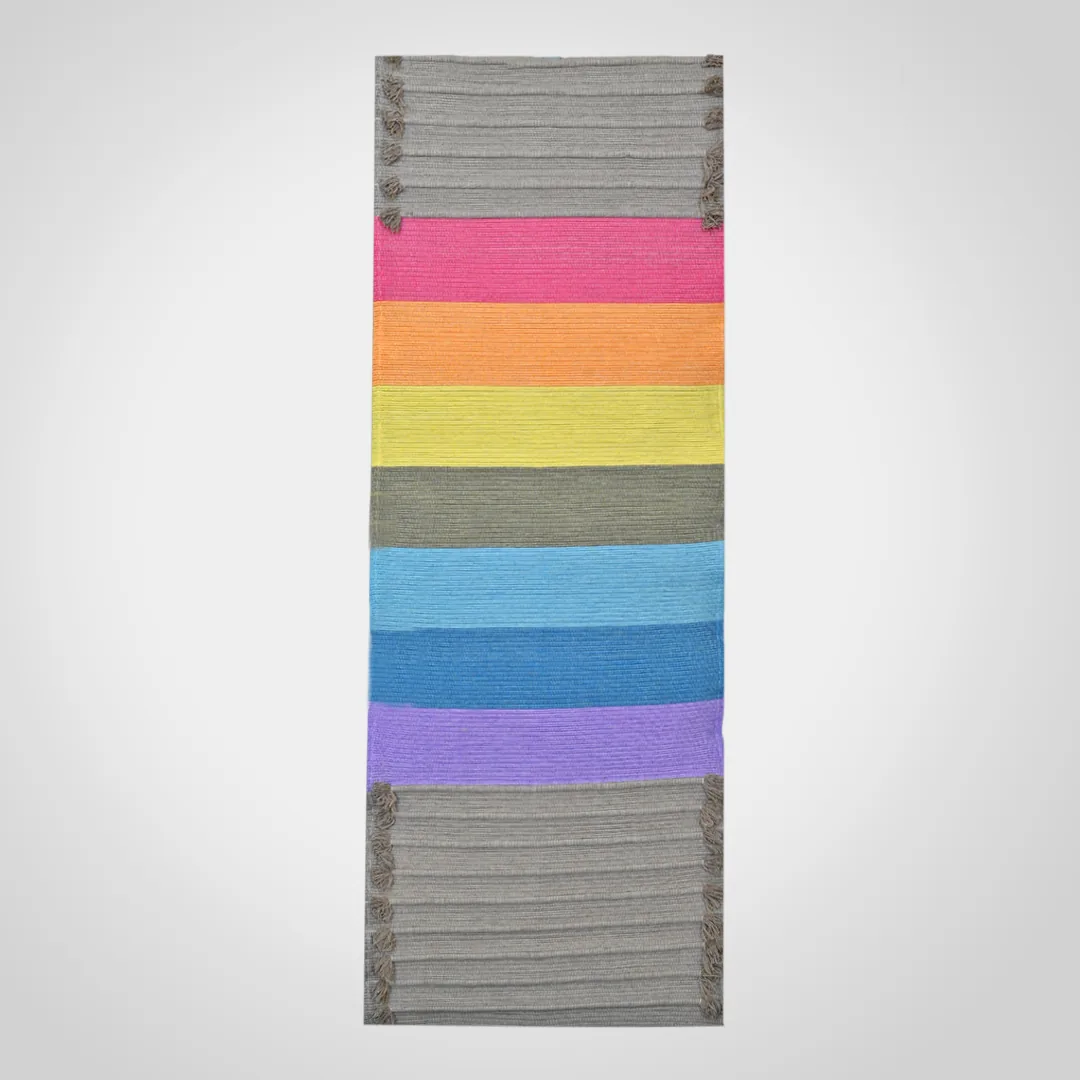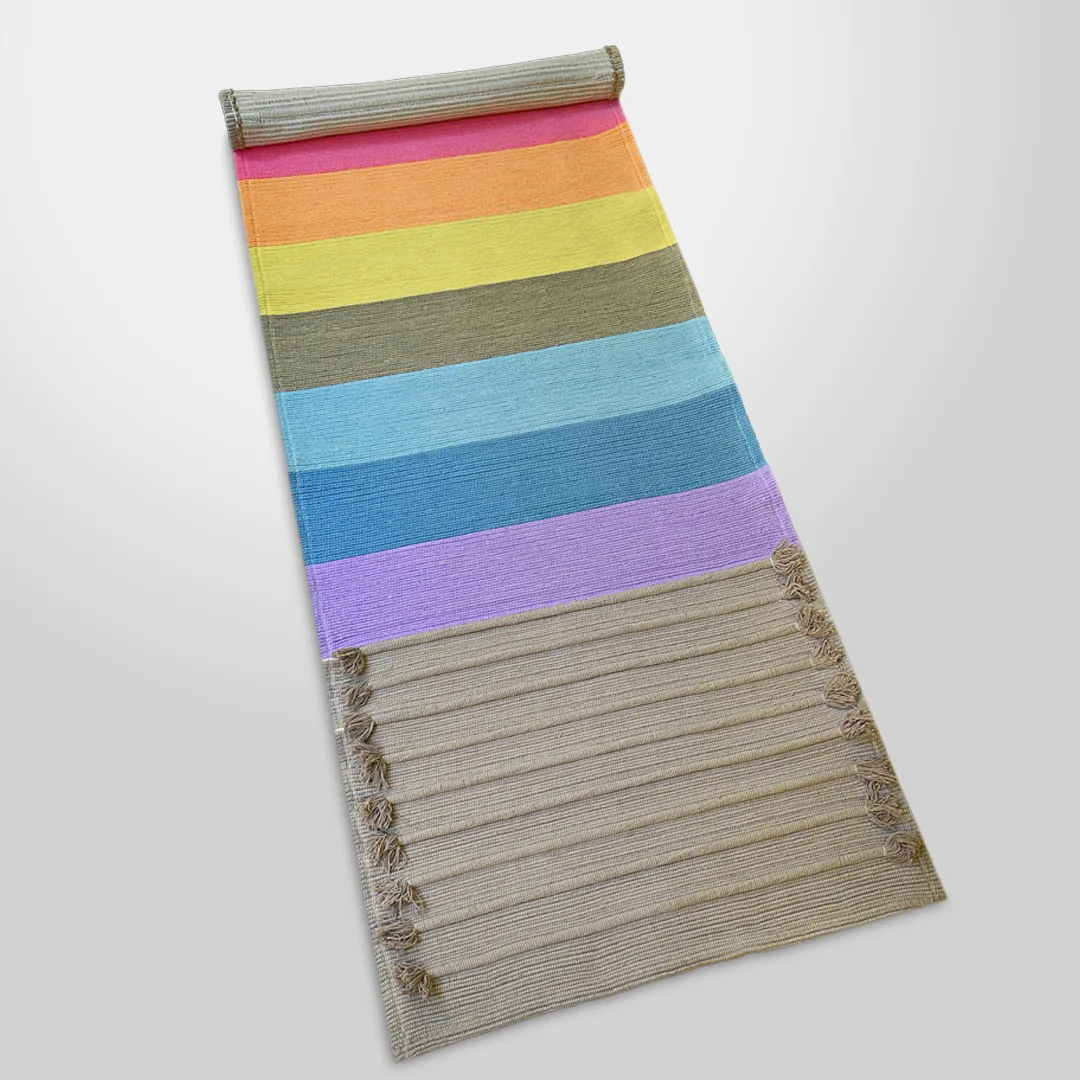
We do not know the carbon footprint of a TwinsPoles mat, because we have never measured it, so you will not find a number on this page or anywhere on our site. What we can say is qualitative and checkable: our mats are woven by hand on looms that use no electricity, from cotton, grass and banana fibre rather than petroleum foam, and they are shipped across India by courier like any other parcel. Below is what a real footprint would have to include, where we think ours is light, where it is not, and why we will not say "carbon neutral".

What a footprint actually counts
A product footprint is a life-cycle calculation. The method is set out in ISO 14040 and ISO 14044, and it follows a product from raw material extraction through manufacture, distribution and use to recycling or disposal. Anyone quoting a figure for a yoga mat should be able to say which of those stages it covers and what data they used. Many figures on mat websites come with neither, which is one reason we publish none.
Stage by stage
| Stage | What we can say | What we have not measured |
|---|---|---|
| Fibre | GOTS-certified organic cotton; sambhu grass; banana bark and fibre from the stem after harvest | Farm-stage emissions; transport of fibre to Komarapalayam |
| Dyeing | Plant dyes in our own dyeing; small batches | Fuel used to heat dye baths; water pumped |
| Weaving | Handlooms, no electricity | Workshop lighting and the latex coat are separate inputs |
| Packing | Paper and cloth, no plastic from us | Weight of packaging per mat over a year |
| Shipping | Courier across India | Distance and mode per parcel |
| Use | Cold hand washing, shade drying; years of use | Close to nil for a hand-washed mat |
| End of life | Plant fibre that can be cut down and reused | What happens to the latex coat and dyes |
Where we believe we are light
The loom. A handloom is powered by the weaver. There is no motor, so the weaving stage, the heart of the product, draws no electricity. A power loom or a foam-extrusion line cannot say that.
The material. Cotton, grass and banana fibre are grown, not refined from oil. That does not make them free of emissions, since farming has its own, but it removes the petrochemical feedstock every PVC or TPE mat starts from.
The years. A six-ply cotton rug such as the Prithvi is dense and lasts years of practice, and when its latex grip softens a thin fresh coat restores it rather than a new mat replacing it. If you are allergic to natural latex, choose with care and write to us first. A footprint divided by many years of use is a smaller footprint per practice, and this is the lever you control.
Where we are not light, or do not know
Cotton is a crop. Growing it uses water, land and inputs, and we have not calculated the farm share of a mat. Our account of that is in is a cotton yoga mat eco-friendly?.
Dye baths need heat. Water for scouring and dyeing is heated, and heat means fuel. We have not measured how much per batch.
Couriers burn fuel. A 1.5 kg parcel from Namakkal district to Delhi or Guwahati travels a long way. We do not control the route or vehicle, and we have no per-parcel figure from our couriers.
The latex coat is an input too. It is natural tree latex, applied thinly by hand, but it is processed and transported before it reaches us.
Why we will not say "carbon neutral"
"Carbon neutral" means a measured footprint balanced by reductions or offsets. We have no measurement, so we have nothing to balance, and we would not buy offsets to cover a figure we had guessed. The same goes for "low carbon" and "climate positive". If we measure one day, we will publish the method and boundaries alongside the number.
What measuring would take
Farm data for our cotton, fuel records from the dye shed, the weight and origin of latex and packaging, and shipping distances by mode for a year of orders, assembled under a recognised method. For a workshop of our size that is a real undertaking, and we would rather do it properly later than badly now.
Frequently asked questions
What is the carbon footprint of a yoga mat?
It depends entirely on the mat and on which life-cycle stages are counted, from fibre or oil extraction through manufacture, shipping and use to disposal. Any figure quoted without a stated method and boundary is a marketing number. We have not measured ours and do not publish one.
Does handloom weaving use electricity?
No. A handloom is driven by the weaver's hands and feet, so the weaving stage of our mats draws no electricity. Other stages, especially heating dye baths and courier transport, do use fuel, and we have not measured those.
Is a cotton yoga mat lower carbon than a PVC or TPE mat?
We cannot say without measurement, so we do not claim it. What is checkable is that cotton, grass and banana fibre are grown rather than refined from petroleum, that our weaving uses no electricity, and that a dense cotton rug lasts years and can be regripped rather than replaced.
Are TwinsPoles mats carbon neutral?
No, and we do not describe them that way. Carbon neutrality requires a measured footprint balanced by reductions or offsets; we have no measurement, so the claim would be meaningless.
If longevity is the lever you control, the Prithvi and the Indico are dense cotton rugs; read the care notes on each product page, and see how long a cotton yoga mat lasts for what to expect.