Where a yoga mat is made matters for three plain reasons: it decides who earns from your purchase, how far the mat travels before it reaches you, and how easily you can find out how it was made. A mat woven by hand in a weaving town in Tamil Nadu supports a weaver's household directly and can be traced to a loom. "Made in India" on its own, though, guarantees none of that, so this article explains what the words do and do not tell you.
Yoga's home, and what that does and does not mean
Yoga is an Indian practice. In 2016 UNESCO inscribed yoga on its Representative List of the Intangible Cultural Heritage of Humanity, on India's nomination. We find it fitting to weave mats for that practice in the place it comes from, on handlooms, and we will not pretend otherwise.
That is a reason of meaning, not of merit. A mat is not better at being a mat because of where the practice began, and we make no claims about what other countries make. If you want a mat made here, the reasons that hold up are the practical ones below.
Who earns from the mat
Hand-weaving is still one of India's large livelihoods. According to the Ministry of Textiles, citing the Fourth All India Handloom Census 2019–20, the country has 26,73,891 handloom weavers and 8,48,621 allied workers; Tamil Nadu alone accounts for 1,97,818 weavers and 45,757 allied workers. Those are the people who warp, weave, dye, finish and knot by hand.
When a mat is handwoven, the largest part of its cost is time at the loom, and that time is paid to a person rather than to a machine. We weave in our own workshop in Komarapalayam, Namakkal district, with our own weavers and our own dyeing, and no middlemen. We describe a weaving day in Who weaves your mat. We do not publish names or numbers of weavers, and we will not invent them here; what we can say is that the people who made your mat are the people who sell it to you.
How far the mat travels
A shorter supply chain is easier to see into. Our cotton is GOTS-certified organic cotton; our other mats are sambhu grass, darbha and banana fibre; our dyes are plant extracts prepared in our own dye shed; the natural latex grip layer is brushed on by hand in the same workshop. The mat is then packed and shipped within India. We do not yet export, so every mat we make is bought here.
We have not measured our carbon footprint and will not quote a number we do not have. What we can say is that the weaving uses no electricity, and that the weaving, the dyeing, the finishing and the sale happen in one place. That is the honest version of "low footprint", and we explain its limits in The footprint of a handwoven mat.
What "made in India" does not guarantee
The phrase tells you where a product was made. It does not tell you how. In particular it does not guarantee that a mat is:
| It may still be | Why the label does not settle it | What to ask instead |
|---|---|---|
| Machine-woven | Power looms are common across India, and that is a legitimate way to make cloth | "Handloom or power loom?" and look at the selvedge |
| Made of plastic foam | PVC and TPE mats are made in India too | "What is the mat made of, front and back?" |
| Dyed with synthetic colour | Most textile dyeing is synthetic | "Which dyes, and which plants if natural?" |
| Resold through several hands | A label does not show the chain | "Who wove this, and where?" |
| Conventionally grown cotton | "Indian cotton" says nothing about inputs | "Is the cotton certified organic, and by whom?" |
We go through the practical checks, including the Government of India's Handloom Mark, in How to spot a genuine handloom product. We do not currently hold Handloom Mark registration ourselves; for our mats the evidence is the weave, the tassels and the fact that you can ask us directly.
What we can say about ours
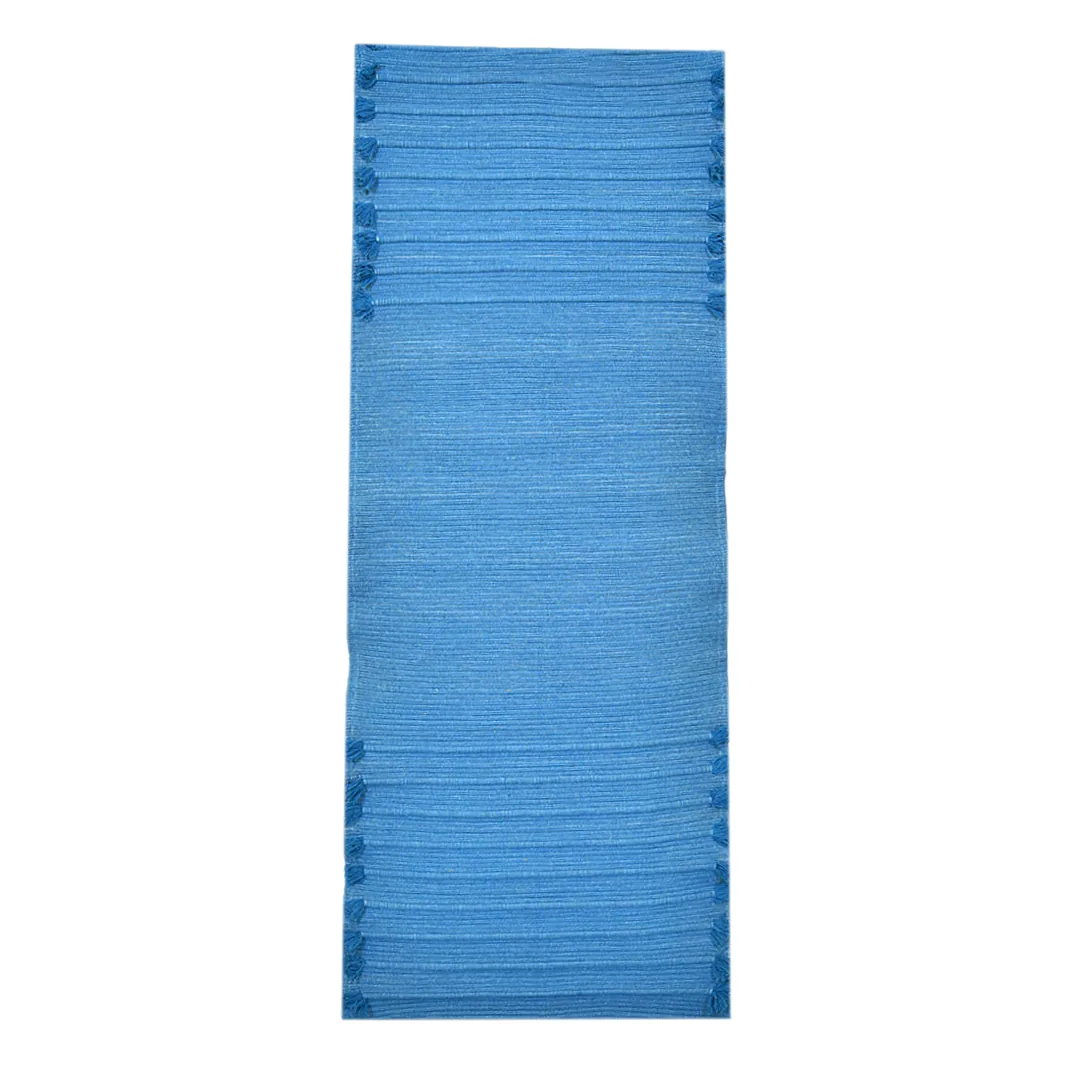
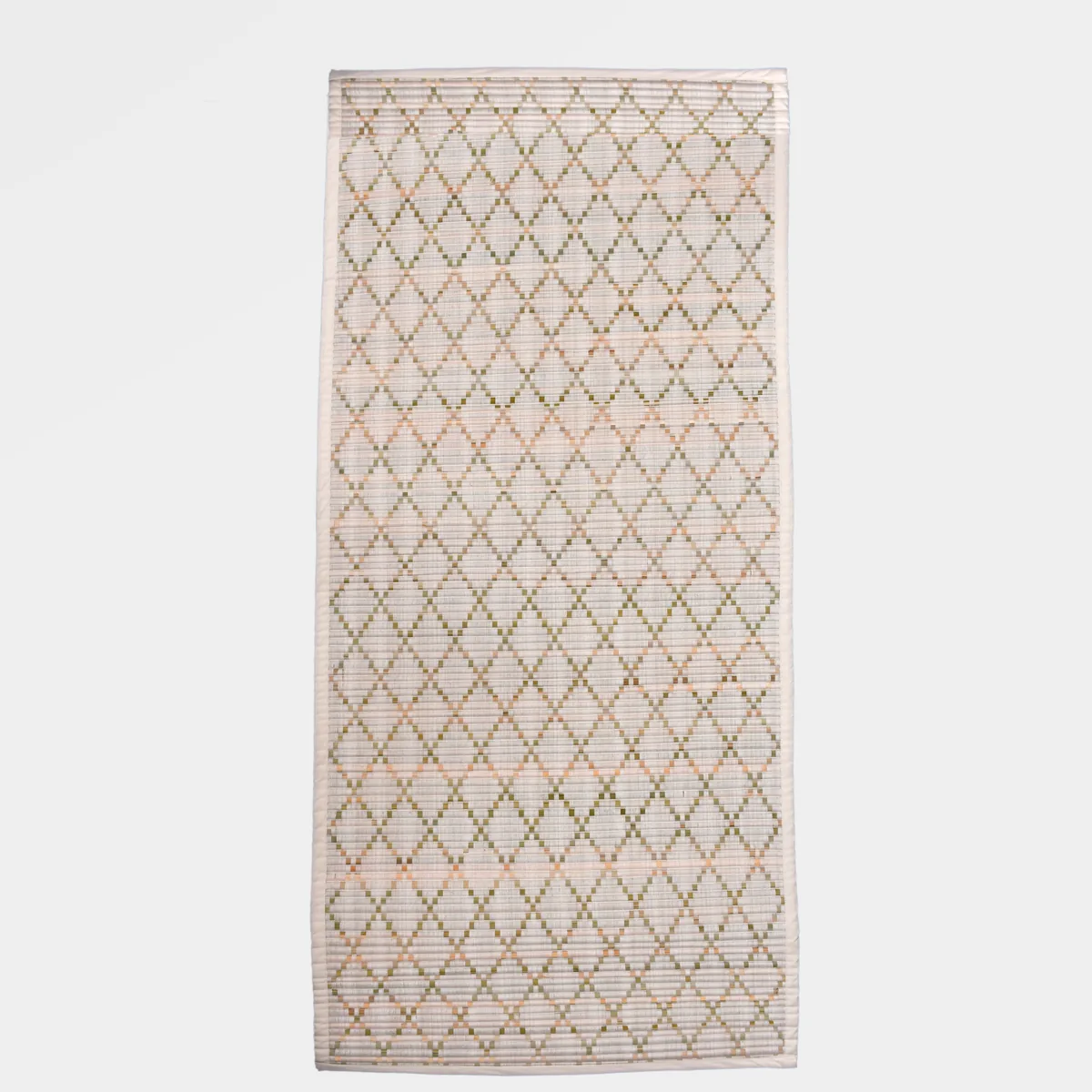
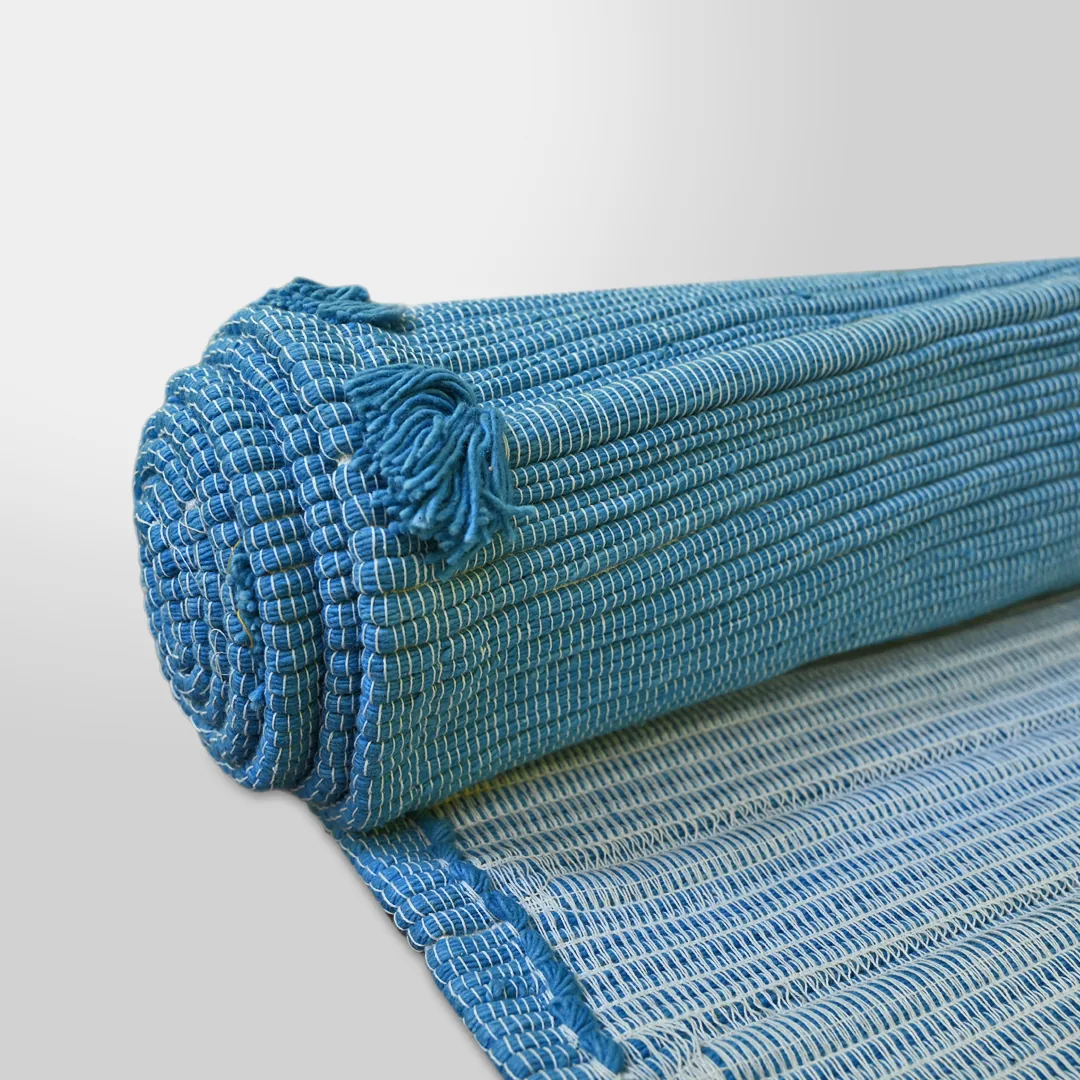
Every TwinsPoles mat is handwoven in Komarapalayam by our own weavers. The Indico is GOTS-certified organic cotton, ribbed, dyed with true indigo and finished with hand-knotted tassels. The Sambu Diamond is sambhu grass woven with organic cotton, 3 mm thick and about a kilogram, with a plant-dyed green and peach lattice. Both carry a thin layer of natural tree latex brushed onto the underside so they hold on tile, marble and wood. If you are allergic to natural latex, choose with care and write to us first.
That is the whole claim: made here, by hand, by us, from plant fibres and plant dyes. We think it is a better reason to buy than the flag.
Frequently asked questions
Does "made in India" mean a yoga mat is handwoven?
No. The words say where a mat was made, not how. India has a very large handloom sector, but it also has power looms and foam mat factories. Ask whether the mat is handloom or power loom, what it is made of, and who wove it; a handwoven mat shows a slightly uneven selvedge, small variations in the weave and hand-finished ends.
Why does it matter where a yoga mat is made?
Because it decides who earns from the sale and how far the product travels. A mat handwoven in a weaving town pays for a weaver's hours, and a short supply chain is one you can ask questions about. Yoga's Indian origin is a reason of meaning for us as weavers, not a claim that a mat is better for it.
Does TwinsPoles ship outside India?
Not yet. Every mat we weave is sold within India, with cash on delivery available; see the Shipping page for current terms.
How many handloom weavers are there in India?
The Fourth All India Handloom Census 2019–20, as cited by the Ministry of Textiles, counts 26,73,891 handloom weavers and 8,48,621 allied workers across the country, with 1,97,818 weavers and 45,757 allied workers in Tamil Nadu.
If you want to see the weave for yourself, the Indico shows the hand beat most clearly, and the Sambu Diamond shows grass and cotton woven together on the same looms; the full range is in the collection.