Handwoven mats can be returned or exchanged, but the terms rest on one distinction: the natural variation of a hand-made, plant-dyed object is not a defect, while a flaw in the making or damage in transit is. A mat coming back to us must be unused, and the quickest way to sort out any problem is to write through the Contact page with your order number and a few photographs. The current terms, including time limits, are on our Returns page; this article explains the thinking behind them.

Why handwoven goods need their own rules
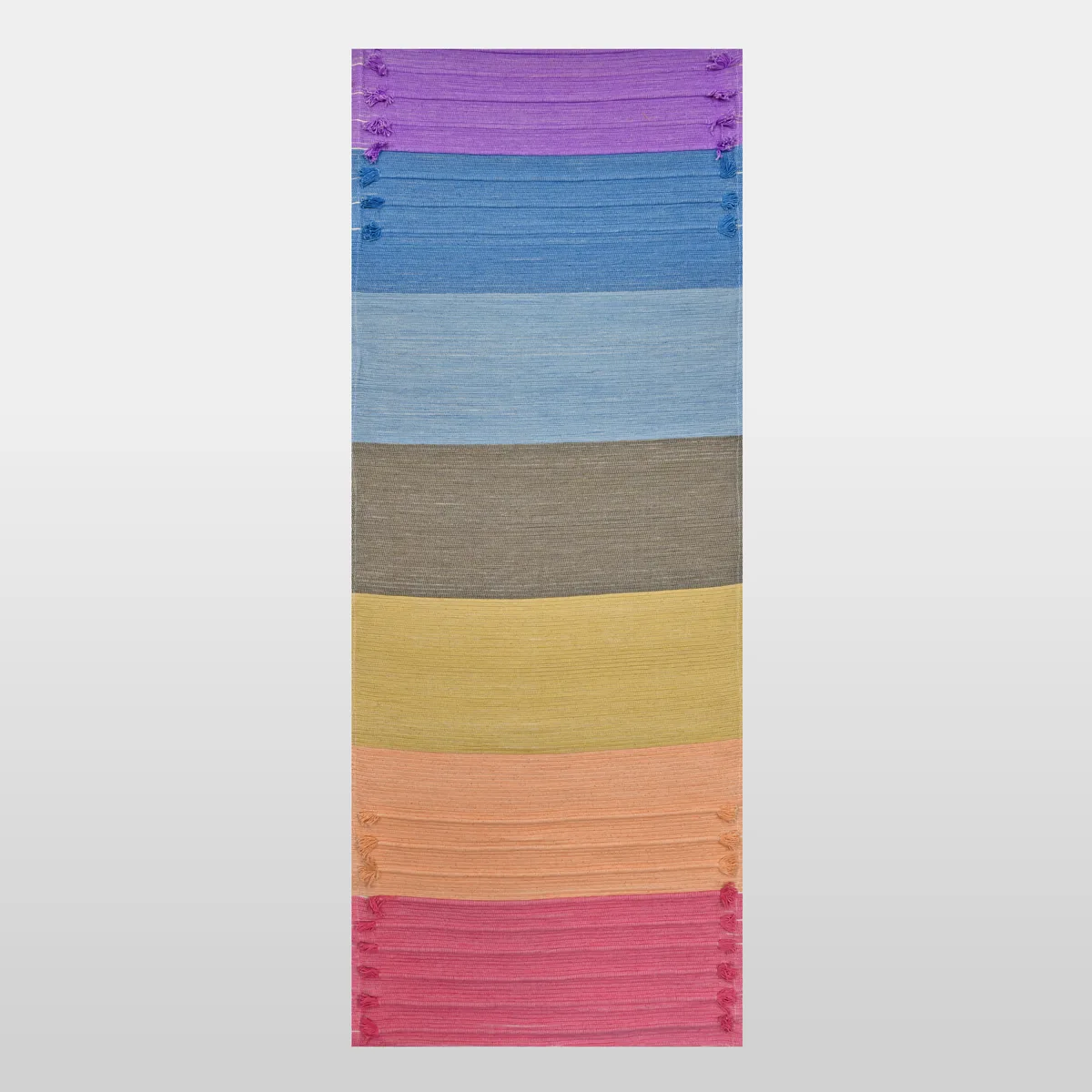
A factory mat is identical to the one next to it, so any difference is a fault. A handloom mat is not. Our weavers beat each weft by hand, the yarn is dyed in plant baths that differ from vat to vat, and two Prana Shakti rugs woven three months apart will be recognisably the same rug and visibly not the same object. Returns terms written for factory goods would either reject honest complaints or treat every rug as faulty. Ours try to draw the line where it actually falls.
What is variation, not a defect
- Shade. Plant colour differs between dye batches, and from a photograph on a screen.
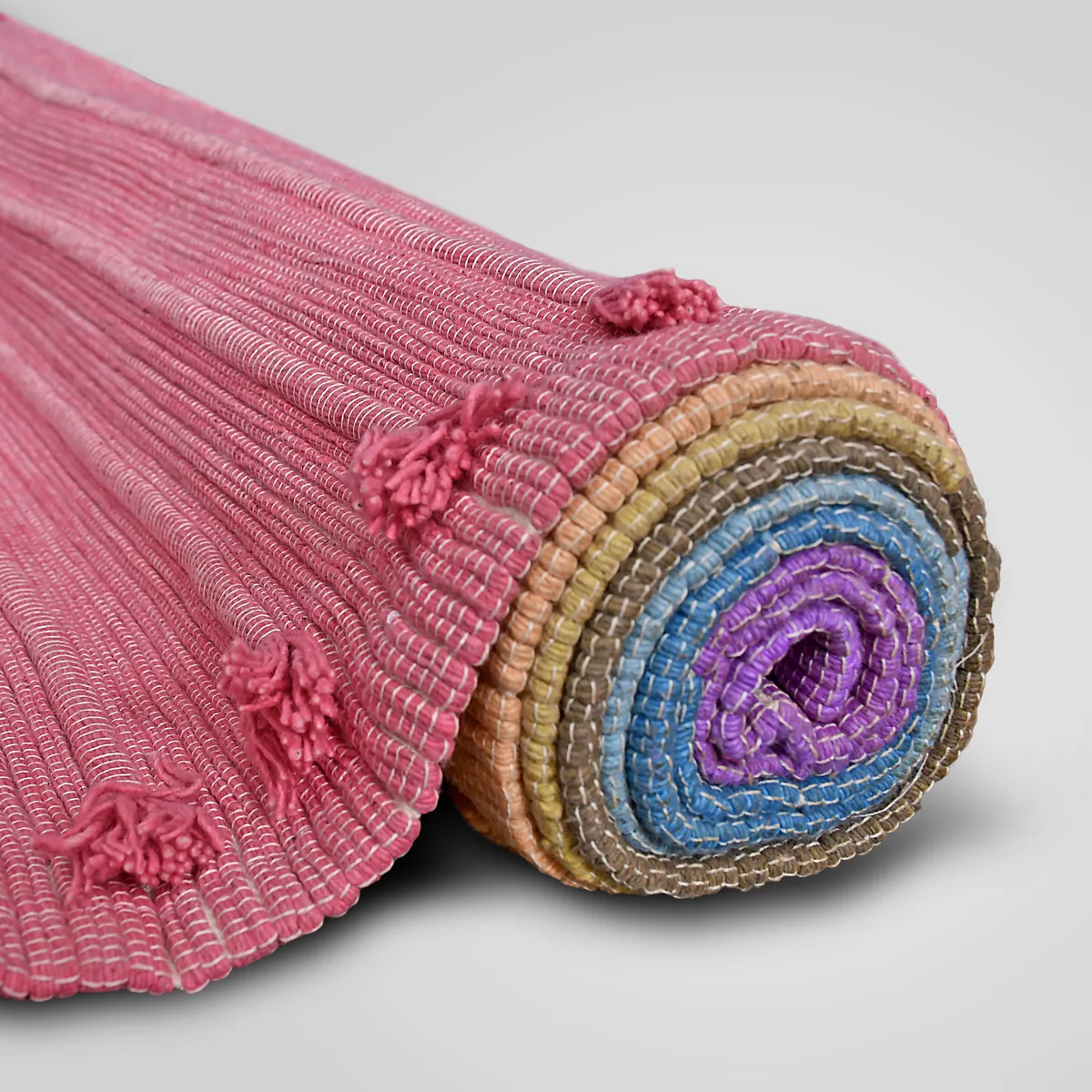
- Slubs and uneven ribs. Small thickenings in the yarn and slight unevenness in the weave are the signature of a handloom; see handloom versus power loom mats.
- Size. Handwoven cloth relaxes off the loom and after washing; a little difference from the listed length and width is normal.
- Tassels. Hand-knotted tassels are not all the same length.
- Colour in the first wash. Plant-dyed cotton gives up a little colour in the first rinses, which is why we ask you to wash the chakra rugs and the Indico separately at first; see why plant-dyed mats change colour.
- Grass and banana fibre. Fibre fuzz on a banana mat, and differences in the colour of the grass in a Sambu Jute, are the nature of the plant.
- The latex underside. The thin coat of natural tree latex is brushed on by hand, so its sheen is not perfectly even, and it softens after many washes, which can be refreshed. If you are allergic to natural latex, choose with care and write to us first.
Our article on why no two handwoven mats are identical goes further into each of these.
What we count as a defect
- A hole, a broken warp thread, or a selvedge or binding that unravels.
- A latex layer missing in patches, so the mat will not lie flat or grip from the first day.
- The wrong mat, colourway or size sent.
- Damage in transit: a torn, wet or stained mat, or a parcel that arrives opened.
- A mat that arrives smelling of mildew.
If any of these describes your mat, it is our problem to put right, not yours to live with.
Why the mat must be unused
A yoga mat is used barefoot and absorbs sweat, and plant-dyed cotton changes once washed. A mat that has been practised on or washed cannot go to another customer, so we can only take back a mat in the condition it left us. That still leaves room to inspect it: unroll it on a clean floor, look at both sides in daylight, stand on it, check the length against your height, and keep the packaging until you are sure. What you should not do before deciding is sweat on it or wash it.
How to raise an issue
- Write through the Contact page and quote your order number.
- Attach photographs taken in daylight: the whole mat laid flat, a close-up of the problem, and the packaging if the damage happened in transit.
- Tell us what you would like: an exchange, a different mat or a refund. The options in each case are set out on the Returns page.
- Wait for our reply before sending anything back; we will confirm the address and method.
What happens next
We look at the photographs and tell you honestly whether it is variation or a fault. Where it is a fault, we put it right. Some things, such as a loose tassel or a thin patch of latex, may be repairable. Where a replacement has to be woven, we tell you how the loom schedule looks rather than guessing a date. Where you would rather have your money back, the Returns page explains how that works.
Frequently asked questions
Can I return a mat because the colour is different from the photo?
If it is the wrong colourway, yes, that is our error. If it is the right mat and the shade is a little warmer, cooler or softer than your screen showed, that is the nature of plant dye and handloom weaving rather than a defect; the Returns page sets out whether an unused mat can still be exchanged in that case.
Can I return a mat I have used once?
The general rule is that returned mats must be unused, for the hygiene reasons above. A fault that only shows itself in use, such as a latex layer that fails in the first week, is still a fault, so write to us with photographs and we will look at it properly.
Who pays for the return shipping?
It depends on the reason, and the Returns page states the current terms. Tell us the situation first; we will say what applies before anything is shipped, so there are no surprises on either side.
How long do I have to raise an issue?
The time limits are on the Returns page rather than here, because they may be revised. Whatever the limit, sooner is better: inspect the mat on the day it arrives, while the packaging is still to hand.
Before you buy, read the Returns page and the Shipping page; if anything is unclear, ask us through the Contact page and we will answer before you order.