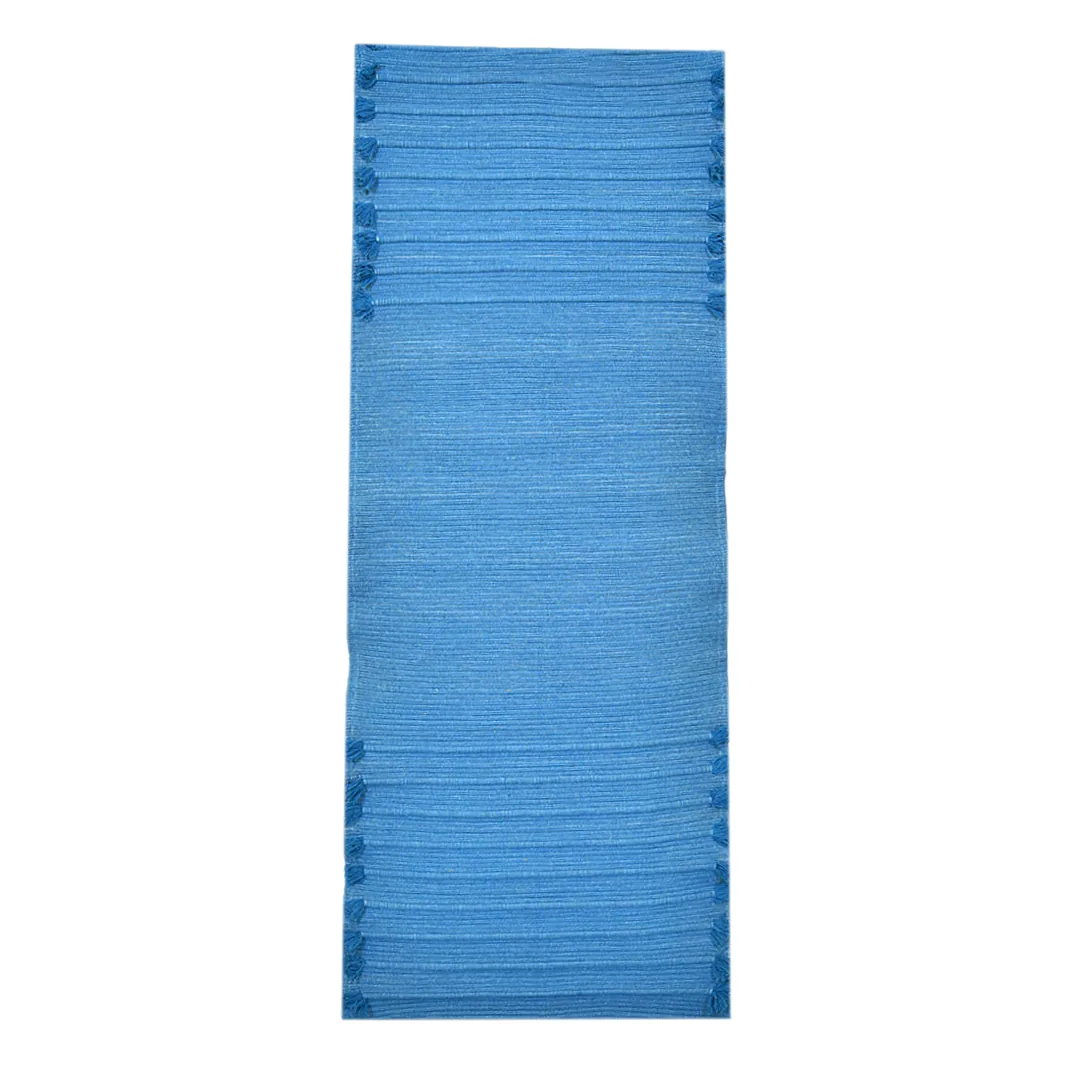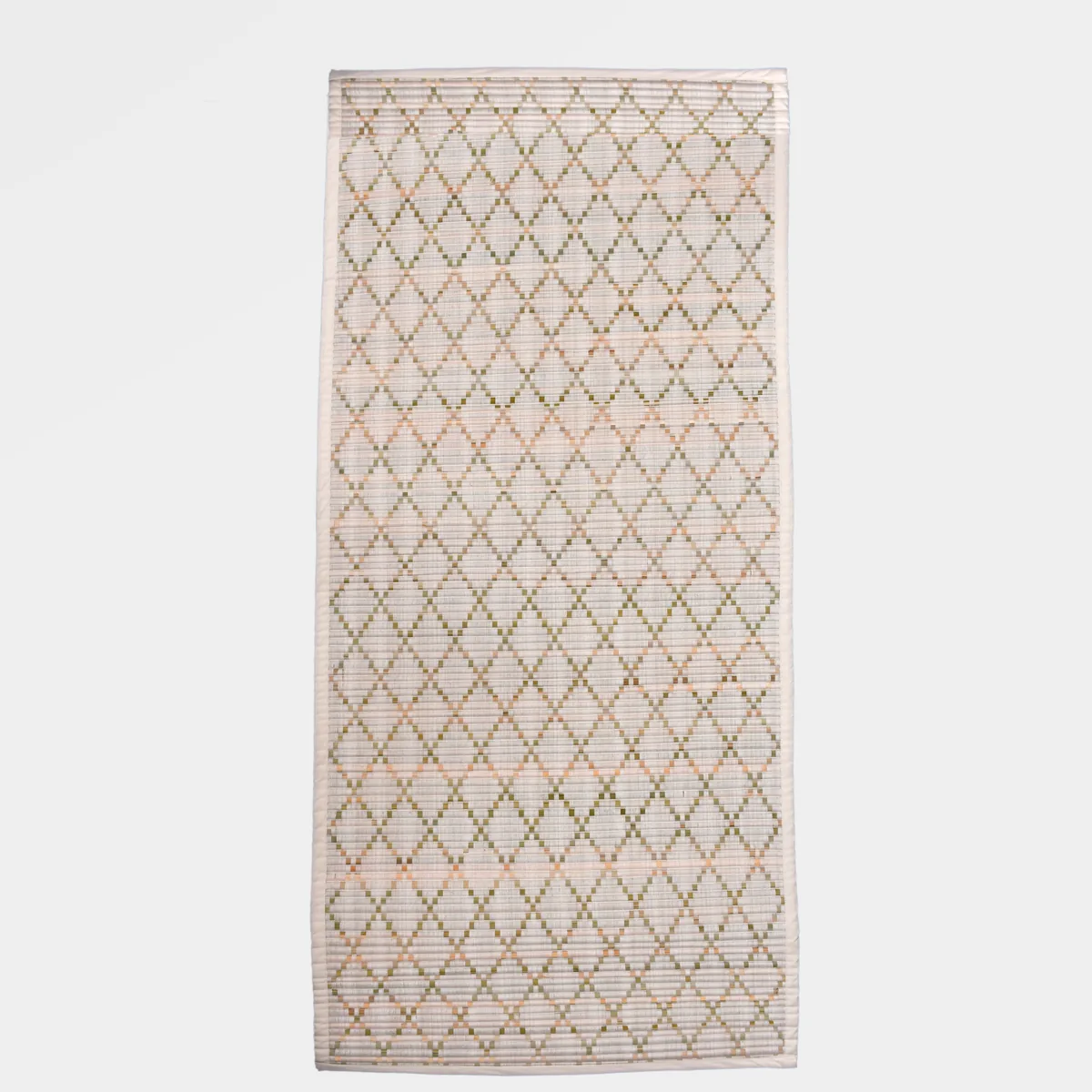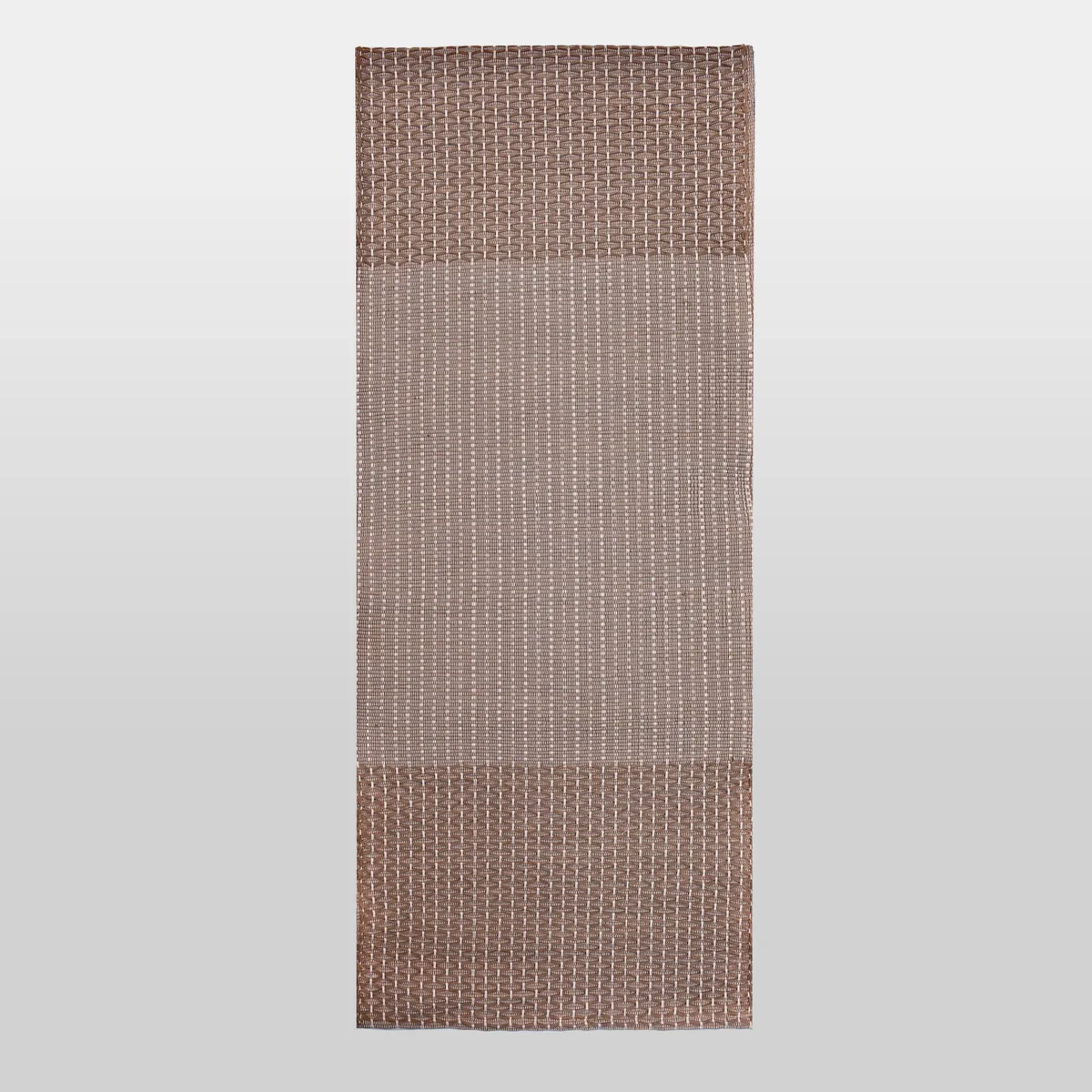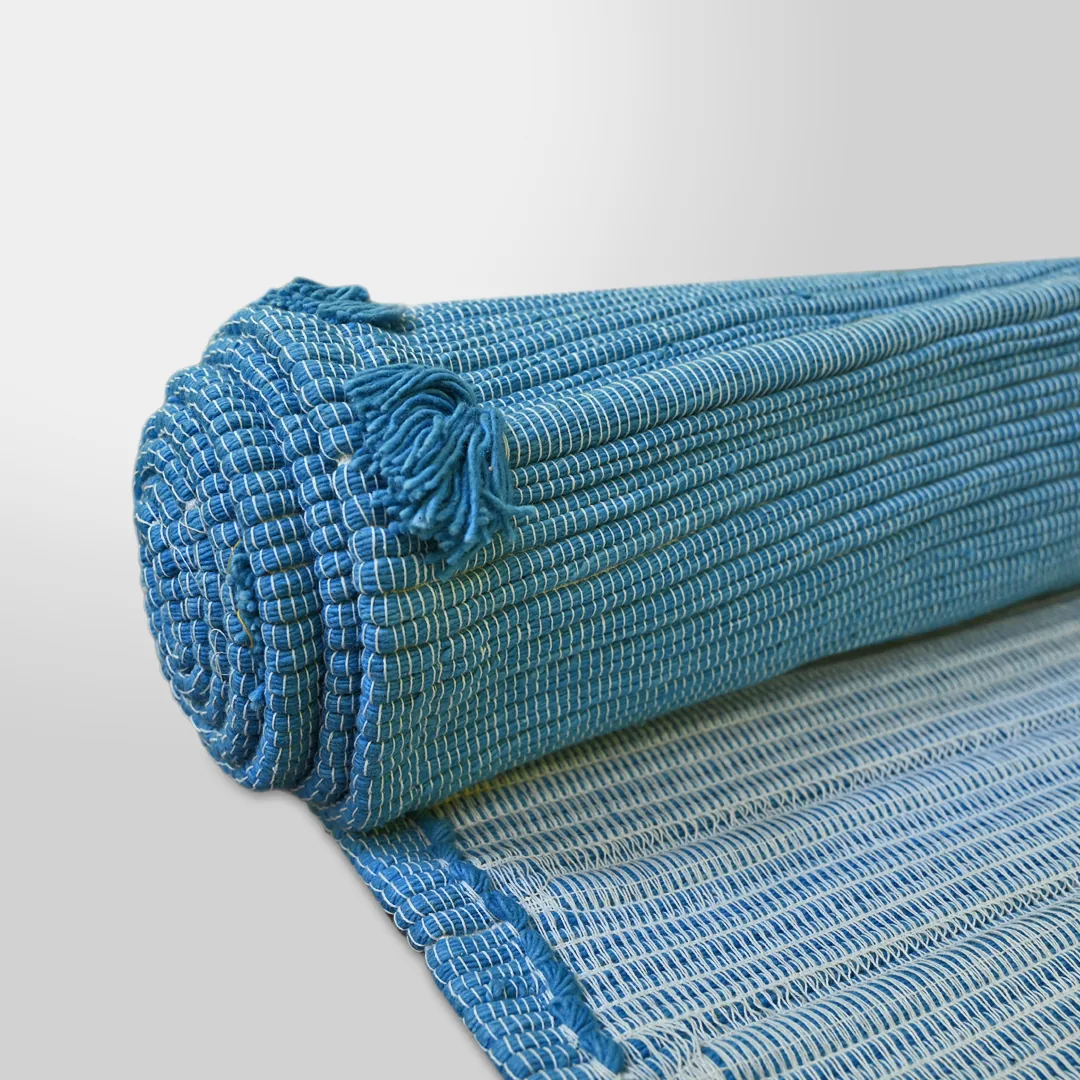
These are the 25 questions people ask us most often about yoga mats, answered in a paragraph each with a link to the fuller guide. The short version: choose a mat for how you sweat and what floor you have before you worry about thickness; wash cotton cold and never soak grass; expect plant colour to vary and soften; and know that every mat we weave except the Darbha has a thin natural latex grip underneath.

Choosing a mat
How do I choose a yoga mat?
Decide what you need before you look at what is for sale: your style of practice, the floor at home, how much you sweat, how your knees feel and whether you want to wash the mat. Then check weight, length and thickness, ask what the mat is made of, and read the returns terms. Our 10-point checklist walks through each question.
How thick should a yoga mat be?
For most people 4–5 mm is the all-round thickness: enough for kneeling, firm enough for balances. Choose 6–7 mm if your knees are sensitive on the floor, and 3 mm for travel and seated practice. Dense woven cotton feels firmer than foam of the same thickness. See the thickness guide.
How long and wide should a yoga mat be?
Lie down on it. If your head or heels hang off, it is too short. Our yoga mats are 183–188 cm long and 68–69 cm wide, which suits most people up to about 180 cm tall; taller practitioners should look at the 188 cm chakra rugs. The size guide has a height table and notes on width.
What is the best yoga mat for a beginner?
One that grips in your real conditions, can be washed, and does not cost so much that you are afraid to use it. A grass mat such as the Sambu Diamond is a light first mat under ₹2,000 at the time of writing; a 5 mm cotton mat is the longer-term all-rounder. See our guide for beginners in India.
Which mat is best if my hands and feet sweat?
An absorbent one. Rubber and foam are grippy when dry and slippery when wet; woven cotton works the other way round and grips better as it takes up moisture. The Indico is our usual answer. Read best mats for sweaty hands and, for heated rooms, best mats for hot yoga.
Which mat is kindest to bad knees?
The 7 mm Diamond Clay and Diamond Orange are our thickest, and the dense cotton does not bottom out the way soft foam can. Folding the mat edge under the knee, or adding a blanket, helps more than another millimetre of padding. We keep to comfort, not medical advice; see best mats for bad knees.
What is the difference between a yoga mat and a yoga rug?
A rug is woven cloth, usually cotton, used alone or laid over a rubber mat to absorb sweat; a mat in the modern sense is a sheet of foam or rubber. Our cotton pieces are rugs by construction and mats by use, with a latex grip so they can be used alone. The mat versus rug article covers when each makes sense.
Which mat is best for meditation?
A firm, cool, quiet surface rather than a soft one: grass or banana fibre, with a cushion on top to lift the hips. The Darbha, backed in cotton cloth and folding flat, is the traditional seat. Our meditation mat guide compares grass, banana fibre and cotton for long sits.
Materials and what the labels mean
Cotton or rubber: which is better?
Neither, for everyone. Rubber gives deeper cushioning and grips best dry; cotton grips better damp, can be washed properly, weighs less than a full rubber mat and ages by softening rather than crumbling. Our cotton versus rubber comparison lays it out fairly.
What does "GOTS-certified" mean on a yoga mat?
GOTS is a standard for organic textiles covering the fibre and its processing. Our cotton is GOTS-certified organic cotton; the certification is about the cotton, not the whole finished mat, and we never apply the term to our grass or banana fibre mats. What the standard covers and does not cover is explained in what GOTS-certified organic cotton means.
Do your mats contain latex?
Yes, all except the Darbha. The cotton, sambhu grass and banana fibre mats have a thin layer of natural tree latex brushed by hand onto the underside, which is what holds them on tile, marble and wood. The Darbha is backed in cotton cloth instead. If you are allergic to natural latex, choose with care and write to us first. Details in the natural latex grip layer explained.
What is sambhu grass?
A river grass woven with cotton in Tamil Nadu into a firm, breathable mat that feels cool to the touch: 3 mm thick, about a kilo, wiped rather than washed. Our Sambu Jute carries a historical name and contains no jute. Read sambhu grass mats: what the grass is.
Are the dyes natural, and will the colour fade?
The dyes are plant-based: indigo leaves, turmeric, alkanet root, tulsi and neem among others, with more than twenty herbs across the chakra rugs. Plant colour varies between batches and softens gently over years, which we present as its nature rather than a fault. See herbal and plant dyes explained and why plant-dyed mats change colour.
Is a cotton mat better than a PVC or TPE mat?
Different, rather than simply better. Foam mats cushion more and cost less; woven cotton can be washed, re-gripped and kept for years, with no synthetic foam to flake. We compare the materials with sources in cotton versus PVC and TPE and what PVC mats are made of.
How can I tell handloom from power loom?
Look at the selvedge, the slight irregularities in the weave, the density and the hand-knotted tassels. A handloom mat is woven without electricity, one at a time, and no two are identical. Our guide to handloom versus power loom mats shows the tell-tale details.
Frequently asked questions
How do I wash a cotton yoga mat?
Hand wash cold with a mild natural detergent, wash the chakra rugs and the Indico separately at first, and dry flat in shade. The 7 mm Diamond mats can also take a delicate 30 °C machine cycle in a laundry bag. No bleach, fabric softener, tumble dryer or direct sun. Step by step in how to wash a cotton yoga mat, with monsoon tips in how to dry a mat in the monsoon.
How do I clean a grass or banana fibre mat?
Shake it out, wipe with a damp cloth and air it in shade. Never soak or machine wash grass or banana fibre, and wipe the Darbha clean and keep it dry. The full routine, including sweat spots and mildew prevention, is in how to clean a grass yoga mat.
Why is my cotton mat slipping?
There are two kinds of slip. If the mat moves on the floor, sweep the tiles and check the latex underside. If your hands slide on the mat, it is probably bone dry: dampen your palms, and the grip improves as the cotton takes up a little moisture. Both are covered in how to stop a cotton mat slipping.
The grip underneath has softened. Can I fix it?
Yes. After many washes the natural latex layer softens, and a thin fresh coat of natural latex brushed on restores it. Work in a ventilated space and let it dry fully; if you are allergic to natural latex, choose with care and write to us first. Instructions in how to restore the latex grip.
How long does a cotton yoga mat last?
Years, with good care, provided it is washed cold, dried in shade and never stored damp. The latex grip wears first and can be recoated; the weave wears slowly. We do not promise a number of years. Honest ranges in how long a cotton yoga mat lasts.
Should I roll or fold my mat?
Roll the cotton and grass mats; fold only the Darbha, which is made in three panels to fold flat. Never roll a damp mat, and keep mats out of damp cupboards. See roll or fold.
Do your prices include GST?
Yes. Every price on the site is inclusive of GST, and the invoice in your parcel shows our GSTIN and the tax portion. We do not quote a rate in our articles because rates are set by the GST Council and can change. More in GST on yoga mats.
How does shipping and cash on delivery work?
We ship across India, cash on delivery is available now, and shipping is free above ₹1,999. Online payment is being set up. We do not export yet. The current terms, thresholds and delivery notes are on the Shipping page.
Can I return a handwoven mat?
Yes, unused, within the terms on the Returns page. Shade variation, slubs and a little colour in the first wash are the nature of handloom and plant dye, not defects; holes, patchy latex, the wrong mat or transit damage are ours to put right. More in returns and exchanges for handwoven goods.
Do you supply studios and bulk orders?
Yes. Write through the Contact page with the quantity, the mats and your dates; lead times depend on the loom schedule, and we quote each order individually. See wholesale and studio orders and buying mats for a studio.
If your question is not here, the FAQ page has the short site answers and the Contact page reaches the weavers directly; otherwise start with all our mats and the checklist above.